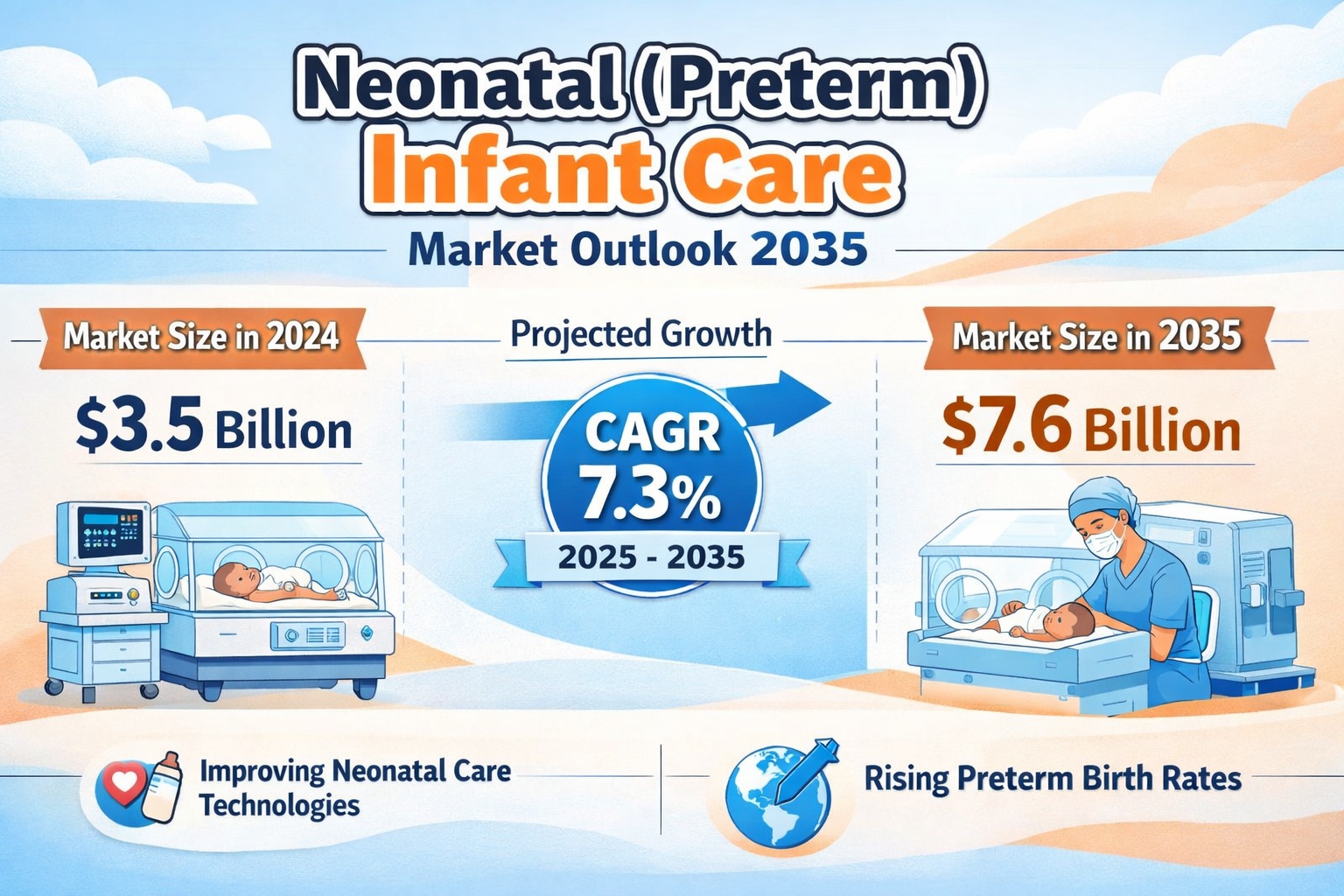
The global neonatal (preterm) infant care market is witnessing steady and sustained growth, driven by the increasing need for specialized care for premature infants. Valued at US$ 3.5 billion in 2024, the market is projected to reach US$ 7.6 billion by 2035, expanding at a compound annual growth rate (CAGR) of 7.3% during the forecast period from 2025 to 2035.
This strong growth trajectory reflects the rising global incidence of preterm births and the growing investments in neonatal healthcare infrastructure. With approximately 15 million babies born prematurely each year worldwide, the demand for advanced neonatal care solutions continues to rise, positioning this market as a critical segment within the broader healthcare industry.
Gain an understanding of key findings from our Report in this sample –
https://www.transparencymarketresearch.com/sample/sample.php?flag=S&rep_id=86810
Market Overview
Neonatal (preterm) infant care focuses on the specialized medical treatment and support required for infants born before 37 weeks of gestation. These infants are particularly vulnerable due to underdeveloped organs, respiratory challenges, and a higher susceptibility to infections.
Care is primarily delivered in Neonatal Intensive Care Units (NICUs), equipped with advanced technologies such as incubators, ventilators, monitoring systems, and phototherapy devices. These technologies play a crucial role in stabilizing preterm infants, improving survival rates, and enhancing long-term health outcomes.
The market encompasses a wide range of product categories, including:
- Thermoregulation devices
- Phototherapy devices
- Monitoring systems
- Neonatal hearing screening devices
- Neonatal resuscitator devices
Among these, thermoregulation devices dominate due to their essential role in maintaining optimal body temperature in preterm infants.
Additionally, the integration of AI-driven solutions and telemedicine is transforming neonatal care by enabling remote monitoring and timely interventions, especially in underserved regions. Increasing awareness about neonatal health and the importance of early intervention further supports market growth.
Key Market Growth Drivers
1. Rising Preterm Birth Rates
The increasing incidence of preterm births is one of the most significant drivers of the neonatal care market. Factors such as advanced maternal age, multiple pregnancies, lifestyle changes, and chronic health conditions like hypertension and diabetes contribute to this trend.
As the number of preterm births rises, healthcare systems are compelled to expand their neonatal care capabilities, thereby driving demand for advanced medical devices and solutions.
2. Growing Awareness of Neonatal Health
There is a growing global awareness regarding the importance of neonatal health and early-stage medical intervention. Governments, healthcare organizations, and NGOs are actively promoting maternal and infant health programs, leading to improved diagnosis and treatment rates.
This heightened awareness is translating into increased demand for specialized neonatal care equipment and services.
3. Rising Healthcare Expenditure
Global healthcare spending has seen a substantial increase, enabling hospitals and healthcare institutions to invest in advanced neonatal care technologies. Increased funding supports the procurement of sophisticated equipment such as incubators, ventilators, and monitoring systems.
Moreover, higher healthcare expenditure also facilitates better training for healthcare professionals, ensuring improved quality of care for preterm infants.
4. Technological Advancements in Neonatal Care
Innovations in neonatal medical devices are significantly enhancing treatment outcomes. Modern equipment now includes features such as real-time monitoring, automated temperature regulation, and AI-based diagnostic tools.
These advancements not only improve survival rates but also reduce complications and long-term health issues among preterm infants.
Analysis of Key Players – Key Player Strategies
The neonatal (preterm) infant care market is highly competitive, with several global and regional players striving to strengthen their market position through innovation, strategic collaborations, and geographic expansion.
Key companies operating in the market include:
- Hamilton Medical
- VNG Medical Innovation System Pvt. Ltd.
- Nice Neotech Medical Systems Pvt. Ltd.
- Natus
- Radiometer
- Bambi Medical
- Delta Medical International
- Fisher & Paykel Healthcare Limited
- GE HealthCare
- Medtronic plc
- Masimo Corporation
- Novos Medical Systems
- Dragerwerk AG & Co. KGaA
- Inspiration Healthcare Group plc
- NIHON KOHDEN CORPORATION
Strategic Focus Areas
1. Product Innovation and R&D
Leading players are heavily investing in research and development to introduce technologically advanced products. AI-enabled monitoring systems, portable neonatal devices, and smart incubators are some of the innovations shaping the market.
2. Strategic Partnerships and Collaborations
Companies are forming partnerships with hospitals, research institutions, and technology providers to expand their product offerings and enhance clinical outcomes.
3. Geographic Expansion
Market players are focusing on expanding their presence in emerging economies where healthcare infrastructure is rapidly developing, and demand for neonatal care is increasing.
4. Mergers and Acquisitions
Acquisitions and mergers are being used to strengthen product portfolios and gain competitive advantages in the global market.
Market Challenges & Opportunities
Challenges
1. High Cost of Neonatal Care Equipment
Advanced neonatal devices are expensive, which can limit adoption, particularly in low- and middle-income countries.
2. Limited Access in Rural Areas
Despite advancements, access to specialized neonatal care remains limited in rural and underdeveloped regions.
3. Shortage of Skilled Healthcare Professionals
The lack of trained neonatal specialists can hinder the effective utilization of advanced medical technologies.
Opportunities
1. Expansion in Emerging Markets
Developing countries present significant growth opportunities due to increasing healthcare investments and rising awareness.
2. Integration of AI and Telemedicine
The adoption of AI-driven diagnostics and remote monitoring systems offers immense potential to improve neonatal care accessibility and efficiency.
3. Government Initiatives and Funding
Supportive government policies and funding programs aimed at reducing infant mortality rates are expected to boost market growth.
Key Player Strategies
Market leaders are adopting a multi-pronged approach to sustain growth and competitiveness:
- Continuous Innovation: Developing next-generation neonatal care devices with enhanced functionality
- Customer-Centric Solutions: Designing products tailored to the needs of healthcare providers
- Training and Education Programs: Supporting healthcare professionals with training initiatives
- Digital Integration: Leveraging digital technologies for improved patient monitoring and data analysis
These strategies are helping companies strengthen their market presence while improving patient outcomes.
Recent Developments
- In February 2025, Neola Medical received approval from the Swedish Medical Products Agency and the Swedish Ethical Review Authority for starting with its first clinical pilot study of a continuous lung-monitoring device in preterm infants.
- In January 2025, Cork-based medtech company Cergenx secured support from the U.S. regulators for its AI-powered device Wave, which enables non-specialist maternity staff to detect brain injuries in the new-borns using real-time EEG analysis. The device delivers results within 15 minutes and needs minimal training, thereby aiming to improve early diagnosis and outcomes in neonatal care.
Investment Landscape and ROI Outlook
The neonatal (preterm) infant care market presents a highly attractive investment landscape, characterized by steady demand, technological innovation, and strong growth potential.
Investors are increasingly drawn to:
- Medical device startups focusing on neonatal care
- AI-based healthcare solutions
- Emerging market healthcare infrastructure projects
The projected CAGR of 7.3% indicates a stable and predictable return on investment. Additionally, the essential nature of neonatal care ensures consistent demand, making it a relatively low-risk investment sector.
Private equity firms, venture capitalists, and strategic investors are actively exploring opportunities in this market, particularly in regions with expanding healthcare systems.
Market Segmentations
By Product Type
- Thermoregulation Devices
- Neonatal Incubators
- Warmers
- Neonatal Cooling Systems
- Phototherapy Devices
- LED Phototherapy System
- CFL Phototherapy System
- Monitoring Systems
- Neonatal Ventilation
- Brain Monitoring
- Blood Gas Monitoring System
- Others (Apnoea Monitor, etc.)
- Neonatal Hearing Screening Devices
- Neonatal Infant Resuscitator Devices
- Others (Vision Screening, etc.)
By End-user
- Hospitals
- Pediatric & Neonatal Clinics
- Nursing Homes
By Region
- North America (leading region with 36.8% market share in 2024)
- Europe
- Asia Pacific
- Latin America
- Middle East & Africa
North America dominates the market due to advanced healthcare infrastructure, high healthcare spending, and strong focus on neonatal health. However, Asia Pacific is expected to witness significant growth due to increasing population and improving healthcare facilities.
Why Buy This Report?
- Gain comprehensive insights into market size, growth trends, and forecasts up to 2035
- Understand key drivers, challenges, and emerging opportunities
- Analyze competitive landscape and strategies of leading players
- Access detailed segmentation and regional analysis
- Stay updated with recent developments and technological advancements
- Make informed business and investment decisions with reliable data
FAQs
1. What is the current size of the neonatal (preterm) infant care market?
The market was valued at US$ 3.5 billion in 2024.
2. What is the projected market size by 2035?
It is expected to reach US$ 7.6 billion by 2035, growing at a CAGR of 7.3%.
3. Which segment dominates the market?
Thermoregulation devices hold the largest market share due to their critical role in maintaining infant body temperature.
4. Which region leads the global market?
North America leads the market, accounting for the largest revenue share.
5. What are the key growth drivers?
Major drivers include rising preterm birth rates, increasing healthcare expenditure, growing awareness of neonatal health, and technological advancements.




Leave a Reply