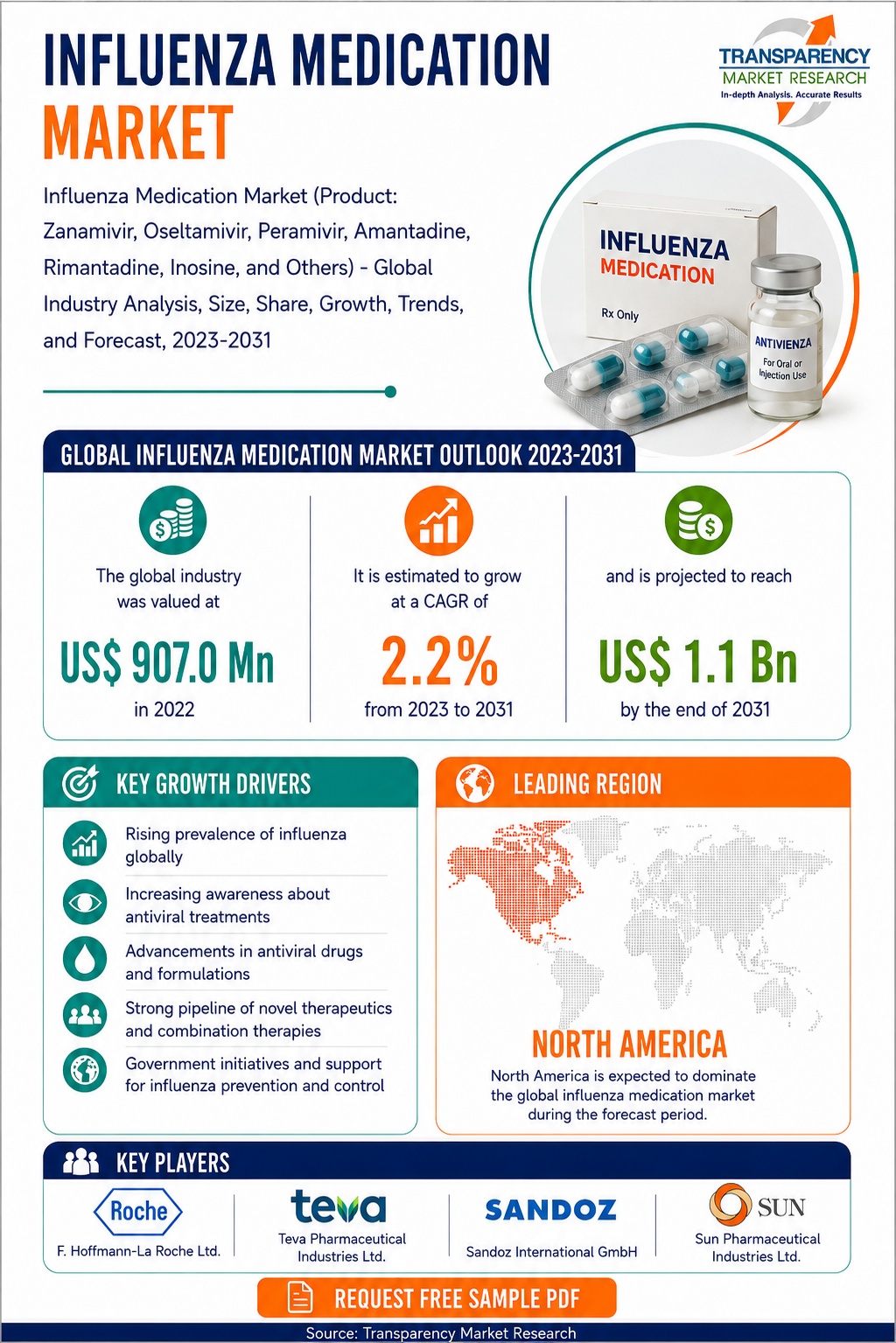
The global influenza medication market continues to witness steady expansion as healthcare systems worldwide focus on improving treatment outcomes, reducing hospitalization rates, and strengthening preparedness against seasonal influenza outbreaks. Growing awareness regarding antiviral therapies, increasing healthcare expenditure, and rapid advancements in vaccine and drug development are supporting long-term market growth.
According to industry analysis, the global influenza medication market was valued at US$ 907.0 Mn in 2022 and is projected to reach US$ 1.1 Bn by the end of 2031, expanding at a CAGR of 2.2% from 2023 to 2031.
Preview essential insights and takeaways from our Report in this sample – https://www.transparencymarketresearch.com/sample/sample.php?flag=S&rep_id=24038
Market Introduction: Influenza, commonly referred to as flu, is a highly contagious respiratory illness caused by influenza viruses. The disease affects millions of individuals every year and remains a major public health concern worldwide. Seasonal influenza outbreaks often lead to severe complications among vulnerable populations such as children, elderly individuals, pregnant women, and immunocompromised patients.
Symptoms associated with influenza include fever, sore throat, cough, fatigue, chills, muscle pain, and respiratory complications. Although most individuals recover within a few days, severe cases may result in hospitalization or death.
The growing prevalence of influenza infections has increased the demand for effective antiviral medications and preventive healthcare strategies. Governments and healthcare organizations are investing significantly in vaccination campaigns, public awareness programs, and pharmaceutical research to mitigate the social and economic burden caused by influenza outbreaks.
According to the World Health Organization (WHO), seasonal influenza affects nearly 1 billion people annually and causes approximately 290,000 to 650,000 respiratory-related deaths globally each year. This alarming disease burden is encouraging pharmaceutical companies to develop innovative antiviral drugs and advanced treatment solutions.
Market Overview
The influenza medication market is driven by rising disease prevalence, increased research funding, advancements in antiviral therapies, and the growing importance of preventive healthcare.
The market includes various antiviral medications such as oseltamivir, zanamivir, peramivir, amantadine, rimantadine, inosine, and other supportive treatment options. These drugs are widely prescribed through hospitals, clinics, pharmacies, and online healthcare channels.
North America dominated the global influenza medication market in 2022 due to advanced healthcare infrastructure, strong pharmaceutical presence, high healthcare expenditure, and increasing awareness regarding influenza management. Meanwhile, Asia Pacific is expected to witness consistent growth during the forecast period due to expanding healthcare access and growing disease incidence in countries such as China and India.
The COVID-19 pandemic further accelerated investment in infectious disease research and highlighted the importance of rapid-response antiviral therapies, thereby positively influencing the influenza medication industry.
Key Drivers of Market Growth
Rising Prevalence of Influenza Cases
One of the primary factors fueling market growth is the increasing number of influenza infections worldwide. The influenza virus spreads rapidly through respiratory droplets and frequently undergoes genetic mutations, resulting in new strains that challenge existing treatment approaches.
The rising burden of seasonal influenza is increasing demand for antiviral medications capable of reducing symptom severity, hospitalization duration, and mortality risks.
According to the Centers for Disease Control and Prevention (CDC), influenza-related complications continue to impact pediatric and elderly populations significantly, further emphasizing the need for accessible treatment options.
Increasing Research and Development Investments
Pharmaceutical companies and governments are increasing investments in research and development activities focused on vaccine innovation and antiviral drug discovery.
The post-pandemic healthcare environment has accelerated global preparedness for viral outbreaks, encouraging long-term funding for influenza management programs. Continuous research is essential due to the virus’s evolving nature and the emergence of drug-resistant strains.
Advanced technologies such as mRNA platforms, AI-assisted drug discovery, and rapid diagnostic systems are helping companies improve treatment efficiency and shorten development timelines.
Growing Awareness and Preventive Healthcare Initiatives
Public awareness campaigns initiated by governments, healthcare organizations, and pharmaceutical companies are improving understanding regarding influenza symptoms, prevention, and treatment.
Seasonal vaccination drives, community healthcare programs, and digital healthcare platforms are encouraging early diagnosis and timely medication usage. Increased awareness is especially important among high-risk groups such as pregnant women, elderly populations, and immunocompromised individuals.
Expansion of Healthcare Infrastructure
Improvement in healthcare infrastructure across emerging economies is also contributing to market expansion. Developing nations are increasing healthcare budgets, expanding hospital networks, and strengthening pharmaceutical supply chains to improve patient access to antiviral medications.
Key Players and Industry Leaders
Leading companies operating in the influenza medication market are focusing on strategic collaborations, research investments, product launches, and clinical trials to strengthen their market presence.
Major companies profiled in the global market include:
- F. Hoffmann-La Roche Ltd.
- Teva Pharmaceutical Industries Ltd.
- Sandoz International GmbH
- Sun Pharmaceutical Industries Ltd.
- Mylan, Inc.
- GlaxoSmithKline plc
- Daiichi Sankyo Company
- Natco Pharma
These companies are actively investing in the development of advanced antiviral drugs, next-generation influenza therapies, and broad-spectrum antiviral formulations. Many players are also exploring treatment options specifically designed for vulnerable patient populations.
Recent Developments
The influenza medication industry has witnessed several strategic developments aimed at strengthening vaccine distribution and treatment accessibility.
In November 2023, Mylab announced a strategic partnership with Ekincare to promote an anti-influenza nasal vaccine developed by the Serum Institute of India. The collaboration aims to expand vaccine accessibility and integrate preventive influenza care into healthcare plans.
Pharmaceutical companies are also expanding clinical trials focused on innovative antiviral compounds capable of addressing emerging influenza strains and reducing drug resistance.
New Opportunities and Challenges
Opportunities
The influenza medication market presents significant opportunities due to growing investments in biotechnology and personalized medicine.
Emerging economies offer strong growth potential because of rising healthcare awareness, expanding pharmaceutical manufacturing capabilities, and increasing government healthcare expenditure.
The growing adoption of telemedicine and online pharmacies is also creating opportunities for broader medication distribution and patient engagement.
Additionally, advancements in universal influenza vaccine development could transform the future landscape of influenza management.
Challenges
Despite promising growth prospects, the market faces several challenges.
Frequent viral mutations and evolving influenza strains continue to complicate treatment effectiveness. Antiviral resistance remains a major concern for healthcare providers and pharmaceutical manufacturers.
High costs associated with research, vaccine development, and manufacturing infrastructure may also limit smaller companies from entering the market.
Furthermore, lack of awareness and limited healthcare access in low-income regions can restrict timely diagnosis and treatment adoption.
Market Trends & Innovations
Development of Advanced Antiviral Therapies
Companies are increasingly focusing on the development of next-generation antiviral medications with improved efficacy and reduced side effects.
Combination therapies and long-acting antiviral drugs are gaining traction in the market due to their ability to enhance patient outcomes.
Integration of Artificial Intelligence in Drug Discovery
Artificial intelligence and machine learning technologies are helping pharmaceutical companies accelerate drug discovery processes, identify viral mutations, and optimize clinical trial efficiency.
AI-driven research platforms are enabling faster identification of promising drug candidates and improving precision medicine approaches.
Growth of Nasal Vaccines and Non-Invasive Treatments
Nasal influenza vaccines and non-invasive drug delivery systems are becoming increasingly popular due to their convenience and improved patient compliance.
These innovations are particularly beneficial for pediatric and elderly patients who may face challenges with traditional injectable vaccines.
Expansion of Digital Healthcare Solutions
Digital health platforms, remote consultations, and mobile healthcare applications are supporting influenza diagnosis, prescription management, and patient monitoring.
The integration of digital healthcare technologies is expected to improve medication accessibility and treatment adherence.
Buy this Premium Research Report and explore vital industry trends – https://www.transparencymarketresearch.com/checkout.php?rep_id=24038<ype=S
Future Outlook
The future of the influenza medication market appears promising as healthcare systems continue prioritizing infectious disease management and pandemic preparedness.
Growing investments in antiviral research, expansion of vaccination programs, and advancements in biotechnology are expected to support long-term market development.
North America is likely to maintain its dominant market position due to advanced healthcare infrastructure and high pharmaceutical spending. However, Asia Pacific is anticipated to emerge as a key growth region owing to its large patient population, increasing healthcare investments, and rising awareness regarding influenza prevention.
Continuous innovation in drug delivery systems, vaccine technologies, and antiviral therapies will play a crucial role in shaping the future competitive landscape.
Market Segmentation
By Product Type
- Zanamivir
- Oseltamivir
- Peramivir
- Amantadine
- Rimantadine
- Inosine
- Others (Laninamivir Octanoate, etc.)
By Distribution Channel
- Hospitals
- Clinics
- Pharmacies
- Others
By Region
- North America
- Latin America
- Europe
- Asia Pacific
- Middle East & Africa
Key Trends for the Future
Several emerging trends are expected to influence the future direction of the influenza medication market:
- Rising demand for broad-spectrum antiviral therapies
- Increased focus on universal influenza vaccines
- Growing use of AI in pharmaceutical R&D
- Expansion of telehealth and online pharmacy services
- Stronger government support for infectious disease preparedness
- Increasing partnerships between biotechnology firms and pharmaceutical companies
- Development of personalized influenza treatment strategies
These trends are likely to reshape the industry and create new opportunities for market participants over the coming years.
Important FAQs with Answers
How big was the global influenza medication market in 2022?
The global influenza medication market was valued at US$ 907.0 Mn in 2022.
What is the projected market value by 2031?
The market is projected to reach US$ 1.1 Bn by the end of 2031.
What is the expected CAGR during the forecast period?
The market is anticipated to grow at a CAGR of 2.2% from 2023 to 2031.
Which factors are driving market growth?
Key growth drivers include rising influenza cases, increasing research investments, advancements in antiviral therapies, and growing awareness regarding influenza management.
Which product segment held the largest market share in 2022?
The oseltamivir segment accounted for the largest share of the global market in 2022.
Which region dominated the influenza medication market?
North America dominated the global influenza medication market in 2022.
Which region is expected to witness strong future growth?
Asia Pacific is expected to experience steady growth due to increasing healthcare investments and rising influenza prevalence.
Who are the leading players in the market?
Major companies include F. Hoffmann-La Roche Ltd., Teva Pharmaceutical Industries Ltd., Sandoz International GmbH, Sun Pharmaceutical Industries Ltd., Mylan, Inc., GlaxoSmithKline plc, Daiichi Sankyo Company, and Natco Pharma.
What are the major challenges faced by the industry?
Antiviral resistance, viral mutations, high research costs, and limited healthcare access in developing regions remain key challenges.
What opportunities exist in the influenza medication market?
Opportunities include universal vaccine development, AI-driven drug discovery, expansion in emerging markets, and growth in digital healthcare services.
More Related Reports –
Uveal Melanoma Treatment Market: https://www.transparencymarketresearch.com/uveal-melanoma-treatment-market.html
Barth Syndrome Therapeutics Market: https://www.transparencymarketresearch.com/barth-syndrome-therapeutics-market.html
Controlled Substance Market: https://www.transparencymarketresearch.com/controlled-substances-market.html
Biologics Market: https://www.transparencymarketresearch.com/global-biologics-market.html
About Us Transparency Market Research
Transparency Market Research, a global market research company registered at Wilmington, Delaware, United States, provides custom research and consulting services. The firm scrutinizes factors shaping the dynamics of demand in various markets. The insights and perspectives on the markets evaluate opportunities in various segments. The opportunities in the segments based on source, application, demographics, sales channel, and end-use are analysed, which will determine growth in the markets over the next decade.
Our exclusive blend of quantitative forecasting and trends analysis provides forward-looking insights for thousands of decision-makers, made possible by experienced teams of Analysts, Researchers, and Consultants. The proprietary data sources and various tools & techniques we use always reflect the latest trends and information. With a broad research and analysis capability, Transparency Market Research employs rigorous primary and secondary research techniques in all of its business reports.
Contact:
Abhishek Budholiya
Transparency Market Research Inc.
State Tower, 90 State Street, Suite 700,
Albany NY – 12207, United States
Tel: +1-518-618-1030
USA – Canada Toll Free: 866-552-3453
Website: https://www.transparencymarketresearch.com
Media Inquiries: media@transparencymarketresearch.com
Sales Inquiries: sales@transparencymarketresearch.com





Leave a Reply