The global healthcare industry is witnessing a major transformation with the emergence of highly targeted therapies designed to improve treatment outcomes while minimizing adverse effects. Among these innovations, peptide therapeutics have gained significant attention for their ability to precisely target biological pathways associated with various diseases. These therapies offer a unique combination of efficacy, safety, and specificity, making them increasingly attractive for treating chronic and complex medical conditions.
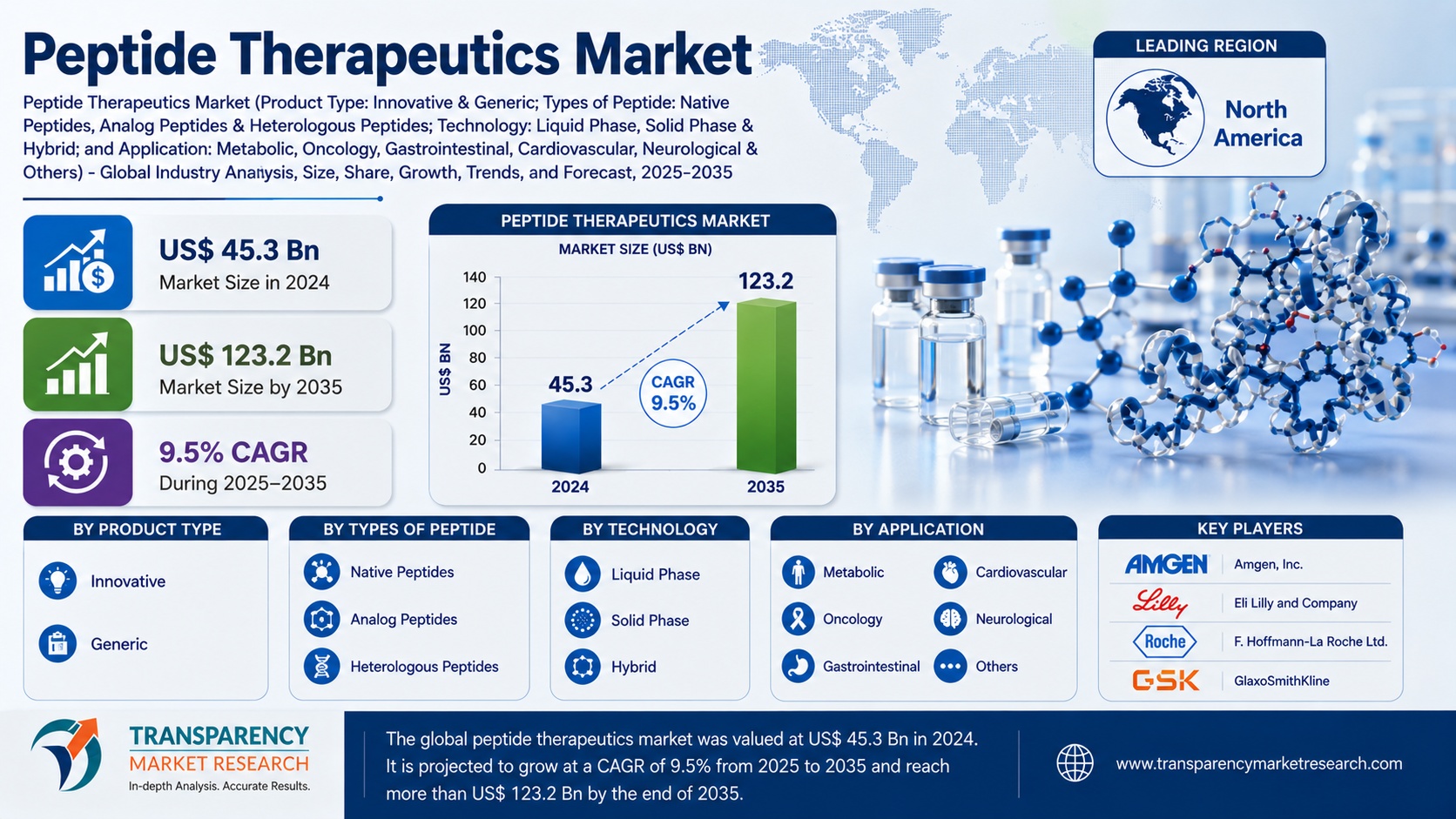
According to recent market analysis, the global peptide therapeutics market was valued at US$ 45.3 billion in 2024 and is projected to surpass US$ 123.2 billion by 2035, expanding at a robust CAGR of 9.5% from 2025 to 2035. Rising prevalence of chronic diseases, growing adoption of personalized medicine, and continuous advancements in peptide drug development are expected to fuel market growth during the forecast period.
Access an overview of significant conclusions from our Report in this sample – https://www.transparencymarketresearch.com/sample/sample.php?flag=S&rep_id=418
Market Overview: Peptide therapeutics are pharmaceutical compounds composed of short chains of amino acids that are designed to mimic naturally occurring proteins, hormones, and signaling molecules within the body. Due to their highly selective mechanisms of action, peptide drugs can interact with specific receptors and biological targets, enabling precise treatment of diseases while reducing unintended effects on healthy tissues.
Over the past decade, peptide-based drugs have become increasingly important in the treatment of metabolic disorders, cancer, cardiovascular diseases, gastrointestinal conditions, and neurological disorders. Therapies such as insulin analogs and GLP-1 receptor agonists have demonstrated the effectiveness of peptides in managing chronic diseases and improving patient outcomes.
The market is also benefiting from advancements in peptide engineering technologies, improved manufacturing processes, and innovative drug delivery systems that address traditional limitations associated with peptide therapies.
Key Drivers of Market Growth
Rising Prevalence of Chronic Diseases
One of the primary factors driving the peptide therapeutics market is the increasing global burden of chronic diseases. Conditions such as diabetes, obesity, cardiovascular disorders, autoimmune diseases, and cancer continue to rise worldwide, creating strong demand for innovative treatment options.
Peptide therapeutics have emerged as promising alternatives to traditional small-molecule drugs due to their ability to target disease mechanisms with exceptional specificity. In metabolic disorders such as type 2 diabetes, peptide-based therapies have shown remarkable effectiveness in regulating blood glucose levels and reducing cardiovascular risks.
Cancer remains another major area of opportunity. Peptides can be engineered to recognize and bind specifically to cancer cells, allowing targeted delivery of therapeutic agents while minimizing damage to healthy tissues. This capability is expected to drive significant adoption of peptide therapies in oncology over the coming years.
As healthcare systems focus on improving patient outcomes while reducing treatment-related complications, peptide therapeutics are becoming an increasingly valuable component of modern medicine.
Growing Demand for Personalized Medicine
The shift toward personalized healthcare is another key growth driver. Personalized medicine aims to tailor treatments based on an individual’s genetic profile, lifestyle, and environmental factors. Peptides are particularly well-suited for this approach due to their ability to be designed for highly specific molecular targets.
Healthcare providers and pharmaceutical companies are increasingly recognizing the benefits of precision medicine in improving treatment efficacy and reducing adverse reactions. Peptide therapeutics enable customized treatment strategies that align with individual patient characteristics, making them highly attractive in oncology, autoimmune diseases, and metabolic disorders.
The growing integration of genomic technologies and biomarker-based diagnostics is expected to further enhance the adoption of peptide therapeutics within personalized medicine frameworks.
Advances in Drug Delivery Technologies
Historically, one of the major challenges associated with peptide therapeutics has been limited oral bioavailability. However, recent innovations in drug delivery systems are overcoming these barriers.
Technologies such as PEGylation, absorption enhancers, nanoparticle formulations, and peptide-based prodrugs are significantly improving drug stability, half-life, and absorption characteristics. These advancements are making peptide therapies more convenient and effective for patients while expanding their therapeutic applications.
Researchers are also developing targeted delivery mechanisms that enable peptides to reach specific tissues and cells, improving treatment outcomes and reducing systemic side effects.
Key Players and Industry Leaders
The peptide therapeutics market is highly competitive and characterized by substantial investments in research and development. Leading pharmaceutical and biotechnology companies are actively pursuing innovative peptide-based therapies to address unmet medical needs across multiple therapeutic areas.
Major market participants include:
- Amgen, Inc.
- Eli Lilly and Company
- F. Hoffmann-La Roche Ltd.
- GlaxoSmithKline
- Novartis AG
- Pfizer, Inc.
- Sanofi
- Takeda Pharmaceutical Company Limited
- Teva Pharmaceutical Industries Ltd.
These companies are expanding their product portfolios through strategic collaborations, acquisitions, licensing agreements, and investments in advanced peptide technologies.
In addition to established pharmaceutical giants, several emerging biotechnology firms are contributing to innovation by developing novel peptide platforms and next-generation therapeutics.
Recent Developments
FDA Guidance Supports Peptide Drug Development
In September 2023, the U.S. Food and Drug Administration issued draft guidance related to clinical pharmacology and labeling requirements for peptide drug products. The guidance provides recommendations for immunogenicity assessments and pharmacokinetic evaluations, helping streamline development pathways for peptide-based therapies.
This regulatory support is expected to encourage investment and accelerate commercialization efforts across the industry.
Nanoparticle-Based Peptide Research Advances
In June 2023, Asep Medical secured funding to develop a nanoparticle-formulated peptide solution designed to treat chronic sinus infections associated with bacterial biofilms. The initiative highlights growing interest in combining peptide therapeutics with nanotechnology to enhance treatment effectiveness.
AI-Powered Drug Discovery Platforms
In March 2023, Fujitsu launched its Biodrug Design Accelerator platform to support peptide drug discovery and development. The platform utilizes advanced computational technologies to optimize peptide design, improve candidate selection, and accelerate research timelines.
The integration of artificial intelligence and computational biology is expected to transform peptide drug development by improving efficiency and reducing costs.
Key Trends for the Future
Expansion of Peptide-Based Vaccines
Researchers are increasingly exploring peptide-based therapeutic vaccines for cancer and infectious diseases. These vaccines offer high specificity and the ability to stimulate targeted immune responses, making them attractive alternatives to traditional vaccine technologies.
The growing interest in immunotherapy is expected to create substantial opportunities for peptide vaccine development.
Growth of Long-Acting Peptide Formulations
Pharmaceutical companies are investing in long-acting peptide formulations that reduce dosing frequency and improve patient adherence. Technologies such as PEGylation and sustained-release delivery systems are enabling therapies with extended duration of action.
These innovations are expected to enhance patient convenience and support wider adoption of peptide therapeutics.
Increasing Use of Artificial Intelligence
Artificial intelligence is becoming a valuable tool in peptide discovery and optimization. AI-driven platforms can rapidly analyze biological data, predict peptide structures, and identify promising drug candidates, accelerating development processes.
The combination of AI and peptide science is expected to significantly influence future market growth.
New Opportunities and Challenges
Opportunities
Metabolic Disease Treatment
The rising prevalence of obesity and diabetes presents enormous opportunities for peptide therapeutics. Peptide-based treatments have demonstrated strong clinical effectiveness and continue to gain acceptance among healthcare providers and patients.
Oncology Applications
Targeted cancer therapies remain one of the most promising areas for peptide therapeutics. Advances in tumor-targeting peptides and peptide-drug conjugates are opening new possibilities for precision oncology.
Emerging Markets
Rapid improvements in healthcare infrastructure across Asia Pacific, Latin America, and the Middle East are creating favorable conditions for market expansion. Increasing healthcare spending and growing awareness of advanced therapies are expected to support demand.
Neurological Disorders
Researchers are exploring peptide-based treatments for neurodegenerative diseases such as Alzheimer’s disease and Parkinson’s disease. These emerging applications could significantly expand market opportunities in the coming years.
Challenges
Manufacturing Complexity
Peptide synthesis requires specialized technologies and rigorous quality control processes, making production more complex and expensive than many traditional pharmaceuticals.
Stability Issues
Certain peptides remain susceptible to degradation and require advanced formulation techniques to maintain stability and therapeutic effectiveness.
Regulatory Requirements
Stringent regulatory standards governing clinical development, manufacturing, and product approval can increase development timelines and costs.
Despite these challenges, ongoing technological advancements continue to improve commercial viability and market potential.
Buy this Premium Research Report to access critical market intelligence – https://www.transparencymarketresearch.com/checkout.php?rep_id=418<ype=S
Market Trends & Innovations
Innovation remains a defining characteristic of the peptide therapeutics industry. Researchers are developing next-generation peptide molecules with enhanced stability, improved receptor selectivity, and superior pharmacokinetic properties.
PEGylation technology has become a widely adopted approach for extending peptide half-life and improving drug performance. Similarly, advances in nanoparticle-based delivery systems are enhancing bioavailability and targeted drug delivery.
Another notable trend is the growing use of hybrid therapeutic platforms that combine peptides with antibodies, nanoparticles, and other biologics to create multifunctional treatment solutions.
Manufacturing innovations are also helping reduce production costs while improving scalability and consistency. Automated peptide synthesis technologies are enabling faster development and commercialization of new products.
Future Outlook
The outlook for the global peptide therapeutics market remains highly positive. Strong demand for targeted therapies, increasing chronic disease prevalence, and growing emphasis on personalized medicine are expected to drive sustained market expansion through 2035.
North America is anticipated to maintain its leading position due to significant R&D investments, strong regulatory support, and the presence of major pharmaceutical companies. However, Asia Pacific is expected to emerge as one of the fastest-growing regional markets due to rising healthcare expenditures, expanding patient populations, and increasing adoption of advanced treatment options.
As scientific understanding of disease biology continues to improve, peptide therapeutics are expected to play an increasingly important role in addressing complex medical challenges. Ongoing innovation in drug discovery, formulation technologies, and delivery systems will further strengthen the market’s growth trajectory.
Market Segmentation
By Product Type
- Innovative
- Generic
By Application
- Metabolic
- Oncology
- Gastrointestinal
- Cardiovascular
- Neurological
- Others
By Route of Administration
- Parenteral
- Oral
- Others
By Types of Peptide
- Native Peptides
- Analog Peptides
- Heterologous Peptides
By Technology
- Liquid Phase
- Solid Phase
- Hybrid
By Manufacturing Type
- In-house
- Contract Manufacturing Organizations (CMO)
By Region
- North America
- Europe
- Asia Pacific
- Latin America
- Middle East & Africa
Important FAQs with Answers
What is the projected size of the peptide therapeutics market by 2035?
The market is expected to exceed US$ 123.2 billion by 2035.
What is driving the growth of the peptide therapeutics market?
Rising chronic disease prevalence, increasing demand for personalized medicine, and advancements in peptide drug delivery technologies are major growth drivers.
Which application segment dominates the market?
The metabolic segment currently holds the largest market share due to growing demand for treatments targeting diabetes and obesity.
Which region leads the global market?
North America dominated the peptide therapeutics market in 2024.
What are the major advantages of peptide therapeutics?
High specificity, strong efficacy, reduced toxicity, and improved safety profiles compared with many traditional drugs.
Who are the leading companies in the market?
Major players include Eli Lilly, Amgen, Roche, Pfizer, Novartis, Sanofi, Takeda, and GlaxoSmithKline.
More Related Reports –
Monogenetic Disease Therapy Market: https://www.transparencymarketresearch.com/monogenetic-disease-therapy-market.html
Anti-Infective Drugs Market: https://www.transparencymarketresearch.com/antiinfective-drugs-market.html
Erectile Dysfunction (ED) Drugs Market: https://www.transparencymarketresearch.com/erectile-dysfunction-drugs.html
Ophthalmic Drugs Market: https://www.transparencymarketresearch.com/ophthalmic-drugs-market.html
About Us Transparency Market Research
Transparency Market Research, a global market research company registered at Wilmington, Delaware, United States, provides custom research and consulting services. The firm scrutinizes factors shaping the dynamics of demand in various markets. The insights and perspectives on the markets evaluate opportunities in various segments. The opportunities in the segments based on source, application, demographics, sales channel, and end-use are analysed, which will determine growth in the markets over the next decade.
Our exclusive blend of quantitative forecasting and trends analysis provides forward-looking insights for thousands of decision-makers, made possible by experienced teams of Analysts, Researchers, and Consultants. The proprietary data sources and various tools & techniques we use always reflect the latest trends and information. With a broad research and analysis capability, Transparency Market Research employs rigorous primary and secondary research techniques in all of its business reports.
Contact:
Abhishek Budholiya
Transparency Market Research Inc.
State Tower, 90 State Street, Suite 700,
Albany NY – 12207, United States
Tel: +1-518-618-1030
USA – Canada Toll Free: 866-552-3453
Website: https://www.transparencymarketresearch.com
Media Inquiries: media@transparencymarketresearch.com
Sales Inquiries: sales@transparencymarketresearch.com



Leave a Reply