The use of opioid medications has become an essential component of pain management for millions of patients worldwide. From chronic pain conditions and cancer-related pain to post-surgical recovery, opioids continue to play a critical role in improving patient comfort and quality of life. However, alongside their therapeutic benefits, opioid medications are associated with several adverse effects, among which opioid-induced constipation (OIC) remains one of the most common and persistent complications.
Get Sample Research Report Copy of this report- https://www.transparencymarketresearch.com/sample/sample.php?flag=S&rep_id=6862
Unlike ordinary constipation, OIC results directly from opioids interacting with receptors in the gastrointestinal tract, slowing bowel movement and causing significant discomfort. As awareness of this condition increases among healthcare providers and patients, the demand for effective treatment solutions continues to grow.
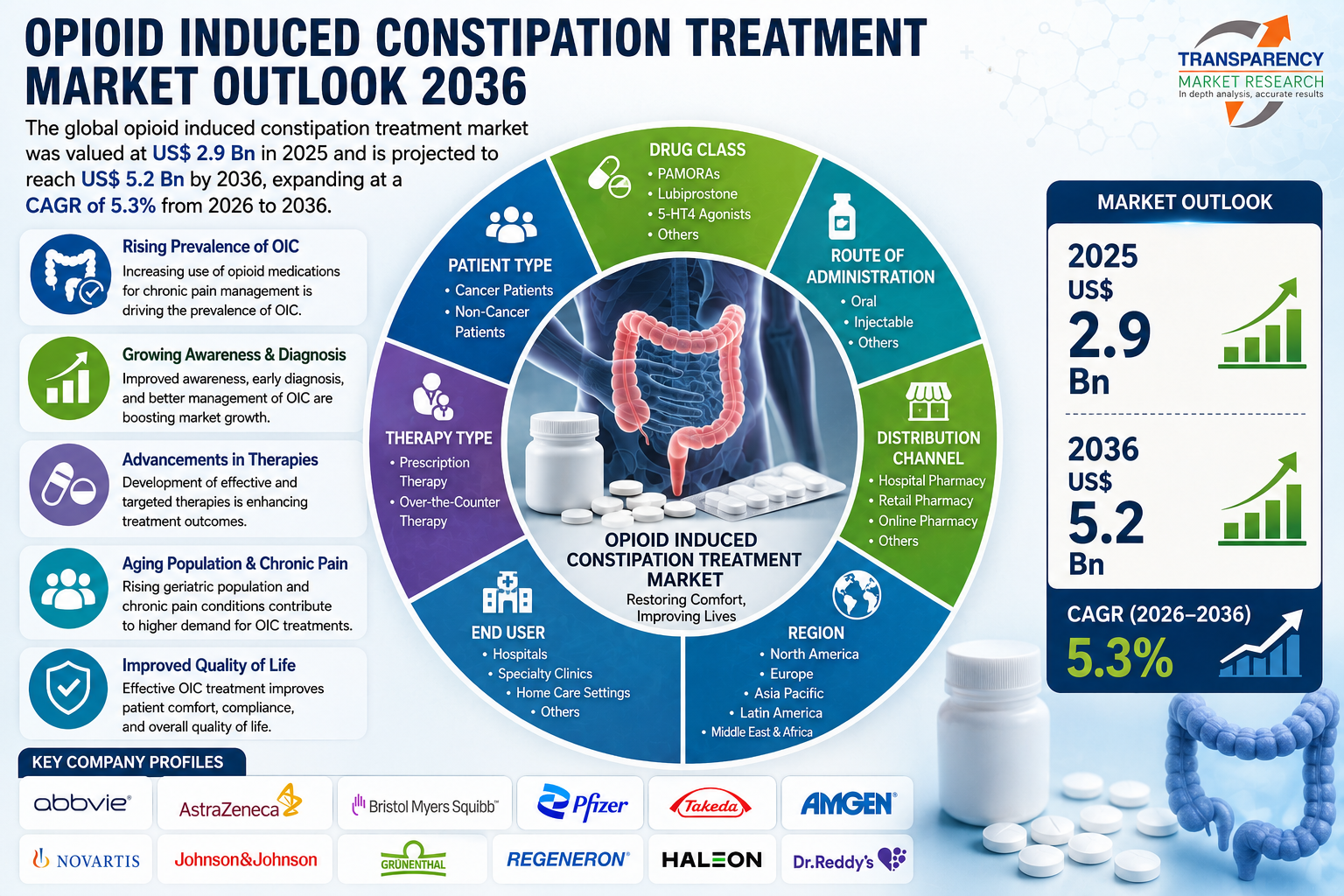
Reflecting this trend, the global Opioid-Induced Constipation Treatment Market was valued at US$ 2.9 billion in 2025 and is projected to reach US$ 5.2 billion by 2036, expanding at a CAGR of 5.3% from 2026 to 2036. Rising opioid usage, a growing elderly population, increasing chronic disease prevalence, and advancements in targeted therapies are expected to drive market growth throughout the forecast period.
Understanding the Burden of Opioid-Induced Constipation
Opioid-induced constipation occurs when opioid medications bind to µ-opioid receptors in the digestive system, reducing intestinal motility and increasing water absorption from the stool. The result is infrequent bowel movements, abdominal discomfort, bloating, and reduced quality of life.
For many patients, OIC can become severe enough to interfere with ongoing pain management. Some individuals may even reduce or discontinue opioid therapy due to gastrointestinal side effects, potentially compromising pain control and overall treatment outcomes.
As healthcare providers increasingly recognize the impact of OIC on patient well-being, effective management strategies are becoming a key component of comprehensive pain care programs.
Rising Opioid Use Continues to Drive Demand
One of the primary growth drivers for the OIC treatment market is the widespread use of opioid medications across healthcare settings. Opioids remain an important treatment option for moderate-to-severe pain associated with cancer, orthopedic conditions, neurological disorders, and post-operative recovery.
Although healthcare systems have implemented measures to promote responsible opioid prescribing, millions of patients continue to rely on these medications for pain relief. As a result, the number of individuals experiencing opioid-related gastrointestinal complications remains substantial.
The growing need to balance effective pain management with improved patient comfort is creating strong demand for specialized OIC treatment solutions.
Aging Population Expands Market Opportunities
Global demographic trends are also contributing significantly to market growth. The elderly population continues to increase worldwide, bringing higher rates of chronic illnesses, degenerative diseases, and surgical interventions that often require opioid-based pain management.
Older adults are particularly vulnerable to constipation due to age-related changes in gastrointestinal function, reduced mobility, and multiple medication use. When opioid therapy is added, the risk of severe constipation increases considerably.
As healthcare providers focus on improving quality of life for aging populations, the demand for effective OIC treatments is expected to rise steadily.
👉 Request your complimentary Sample Market Research Report Copy today to evaluate the depth and quality of insights available here @ https://www.transparencymarketresearch.com/sample/sample.php?flag=S&rep_id=6862
PAMORAs Revolutionizing OIC Management
One of the most significant developments in the treatment landscape is the growing adoption of Peripherally Acting µ-Opioid Receptor Antagonists (PAMORAs). In 2025, this segment accounted for approximately 65.4% of the global market share, making it the leading treatment category.
Unlike traditional laxatives that address symptoms, PAMORAs target the underlying cause of opioid-induced constipation by blocking opioid activity in the gastrointestinal tract without affecting pain relief in the central nervous system.
This targeted mechanism of action has transformed OIC management by offering more effective and predictable outcomes for patients who do not respond adequately to conventional therapies.
As clinical evidence supporting PAMORA efficacy continues to expand, adoption rates are expected to increase further over the coming years.
Growing Awareness Improves Diagnosis and Treatment
Historically, opioid-induced constipation was often underreported and undertreated. Many patients hesitated to discuss bowel-related symptoms, while some healthcare providers underestimated the impact of constipation on treatment adherence and quality of life.
Today, greater awareness among physicians, nurses, pharmacists, and patients is helping improve diagnosis and treatment rates. Educational initiatives and clinical guidelines increasingly emphasize proactive management of opioid-related side effects as part of comprehensive patient care.
This shift toward early intervention is expected to support continued market growth while improving overall patient outcomes.
North America Maintains Market Leadership
North America accounted for approximately 43.7% of global market revenue in 2025, making it the largest regional market for opioid-induced constipation treatment.
The region benefits from advanced healthcare infrastructure, high rates of opioid prescription, strong reimbursement systems, and widespread awareness of OIC management. In addition, the presence of major pharmaceutical companies and ongoing clinical research activities continues to strengthen North America’s leadership position.
Meanwhile, Europe and Asia-Pacific are expected to witness substantial growth as awareness increases and healthcare systems adopt more comprehensive pain management strategies.
Competitive Landscape
The opioid-induced constipation treatment market is characterized by strong competition among pharmaceutical companies seeking to expand their presence in the gastrointestinal and pain management sectors.
Leading market participants include Salix Pharmaceuticals, AstraZeneca, DAIICHI SANKYO COMPANY, LIMITED, Takeda Pharmaceutical Company Limited, Mallinckrodt, Shionogi & Co., Ltd., Ironwood Pharmaceuticals, Nektar Therapeutics, and Cigna Healthcare.
These organizations are investing in product development, clinical research, strategic collaborations, and geographic expansion to strengthen their competitive positions and address evolving patient needs.
Innovation remains a key differentiator as companies focus on developing therapies that provide superior efficacy, safety, and patient convenience.
Recent Industry Development Highlights
A major development occurred in May 2025 when Shionogi & Co., Ltd. announced regulatory approval in China for naldemedine tosilate for the treatment of opioid-induced constipation.
Naldemedine is a peripherally acting µ-opioid receptor antagonist designed to address the root cause of OIC while preserving the analgesic benefits of opioid therapy. The approval significantly expands patient access to advanced OIC treatment options in one of the world’s largest healthcare markets.
Such regulatory milestones demonstrate the growing recognition of opioid-induced constipation as a significant healthcare concern requiring dedicated treatment approaches.
👉 To buy this comprehensive market research report, click here to inquire@ https://www.transparencymarketresearch.com/checkout.php?rep_id=6862<ype=S
Future Outlook
The future of the opioid-induced constipation treatment market appears promising as healthcare providers increasingly prioritize patient-centered pain management. Rising opioid use in chronic disease management, expanding elderly populations, growing awareness, and the success of targeted therapies are expected to support long-term market growth.
Advances in gastrointestinal therapeutics, personalized medicine, and integrated care approaches will further improve treatment outcomes and enhance patient quality of life.
With the market projected to reach US$ 5.2 billion by 2036, opioid-induced constipation treatment is becoming an increasingly important segment within the broader pain management ecosystem. As innovation continues and awareness grows, patients can expect more effective, convenient, and targeted solutions to manage one of the most common side effects of opioid therapy.
About Us Transparency Market Research
Transparency Market Research, a global market research company registered at Wilmington, Delaware, United States, provides custom research and consulting services. The firm scrutinizes factors shaping the dynamics of demand in various markets. The insights and perspectives on the markets evaluate opportunities in various segments. The opportunities in the segments based on source, application, demographics, sales channel, and end-use are analysed, which will determine growth in the markets over the next decade.
Our exclusive blend of quantitative forecasting and trends analysis provides forward-looking insights for thousands of decision-makers, made possible by experienced teams of Analysts, Researchers, and Consultants. The proprietary data sources and various tools & techniques we use always reflect the latest trends and information. With a broad research and analysis capability, Transparency Market Research employs rigorous primary and secondary research techniques in all of its business reports.
Media Contact:
Abhishek Budholiya
Transparency Market Research Inc.
State Tower, 90 State Street, Suite 700,
Albany NY – 12207, United States
Tel: +1-518-618-1030
USA – Canada Toll Free: 866-552-3453





Leave a Reply