The global advanced glycation end products (AGEs) market is witnessing steady expansion, driven by rising incidences of chronic diseases and increasing awareness of glycation-related complications. The market is projected to reach US$ 2.76 billion by 2031, expanding at a compound annual growth rate (CAGR) of 5.4% from 2021 to 2031.
Growth is primarily supported by the increasing burden of diabetes, aging populations, and expanding applications of AGEs in diagnostics, therapeutics, and cosmetic formulations. The integration of advanced analytical techniques such as ELISA and spectrofluorimetric methods further strengthens market valuation.
→Discover Market Opportunities – Request Your Sample Copy Now: https://www.transparencymarketresearch.com/sample/sample.php?flag=S&rep_id=81706
Market Overview
Advanced glycation end products (AGEs) are complex compounds formed through non-enzymatic reactions between sugars and proteins, lipids, or nucleic acids. These compounds accumulate both endogenously and through dietary intake, contributing significantly to aging and chronic disease progression.
AGEs play a central role in multiple pathological conditions, including:
- Diabetes and its complications
- Neurodegenerative disorders such as Alzheimer’s and Parkinson’s diseases
- Cardiovascular diseases and atherosclerosis
- Cancer progression through inflammatory pathways
The COVID-19 pandemic has further highlighted the importance of AGEs, particularly due to the RAGE (Receptor for Advanced Glycation End Products) pathway, which influences inflammatory responses and lung damage.
Recent findings indicate that patients with high serum soluble RAGE (sRAGE) levels are more susceptible to severe COVID-19 complications. This has increased the demand for AGE-targeted therapies and diagnostic solutions, creating new revenue streams for market participants.
Key Market Growth Drivers
Rising Prevalence of Diabetes and Obesity
The growing global burden of diabetes is one of the most significant drivers of the AGEs market. Overweight and obese populations are at higher risk of glycation-related complications, leading to increased adoption of AGE detection and management solutions. Biomarkers such as HbA1c are widely used for long-term glycemic monitoring, further boosting demand.
COVID-19 and RAGE Pathway Implications
The link between high sRAGE levels and COVID-19 severity has intensified research and treatment development. AGEs and RAGE interactions are known to trigger inflammatory cascades and blood clot formation, contributing to higher morbidity and mortality rates.
Increasing Incidence of Chronic Diseases
AGEs are strongly associated with chronic conditions such as:
- Chronic hepatitis C (CHC)
- Cancer
- Neurodegenerative disorders
- Musculoskeletal disorders
AGE accumulation in tissues leads to fibrosis, cellular damage, and impaired organ function, thereby driving demand for therapeutic interventions.
Growing Interest in Anti-Aging and Cosmeceuticals
AGEs contribute significantly to skin aging, including stiffness, yellowing, and reduced elasticity. This has led to increasing demand for anti-glycation skincare products, with pharmaceutical and cosmetic companies investing heavily in novel formulations.
Advancements in Regenerative Medicine
Stem cell-based therapies are gaining traction, but AGE accumulation negatively impacts stem cell survival and proliferation. Ongoing R&D to mitigate these effects is opening new avenues for regenerative medicine applications.
Analysis of Key Players – Key Player Strategies
Leading companies such as AbbVie Inc., Merck KGaA, Takeda Pharmaceutical Company Limited, Estée Lauder Companies, Shiseido Company Limited, Beiersdorf AG, and L’Oréal S.A. are actively shaping the market landscape.
Strategic Focus Areas:
- R&D investments in AGE inhibitors and RAGE antagonists
- Expansion of diagnostic technologies for AGE detection
- Development of anti-aging and cosmeceutical products
- Strategic collaborations with research institutions
- Portfolio diversification into chronic disease therapeutics
These players are leveraging both pharmaceutical and cosmetic segments to maximize revenue potential.
Market Challenges & Opportunities
Challenges
- Lack of standardized measurement methods for AGEs due to their heterogeneous nature
- Limited clinical validation for some AGE-targeted therapies
- High cost of advanced diagnostic tools
- Complex biological pathways involving AGEs and RAGE
Opportunities
- Development of standardized evaluation techniques
- Growing adoption of personalized medicine approaches
- Expansion in emerging markets with improving healthcare infrastructure
- Increasing focus on dietary interventions and preventive healthcare
- Untapped potential in alcohol-induced AGE-adduct research
→Explore Strategies & Trends – Request Full Report Access – https://www.transparencymarketresearch.com/sample/sample.php?flag=S&rep_id=81706
Key Player Strategies
Companies are increasingly adopting targeted strategies to enhance their market presence:
- Targeting AGE Formation in Vivo: Development of drugs that reduce endogenous AGE production
- Metformin-based Approaches: Promoting drugs that lower methylglyoxal (MG) levels, a precursor to AGEs
- Dietary Awareness Campaigns: Encouraging reduced intake of n-6 fatty acids and processed foods
- Innovation in Diagnostic Tools: Advancing fluorescence and immunological testing methods
- Expansion into Emerging Markets: Leveraging growing healthcare demand in Asia Pacific and Latin America
Recent Developments (use as it is from report RD)
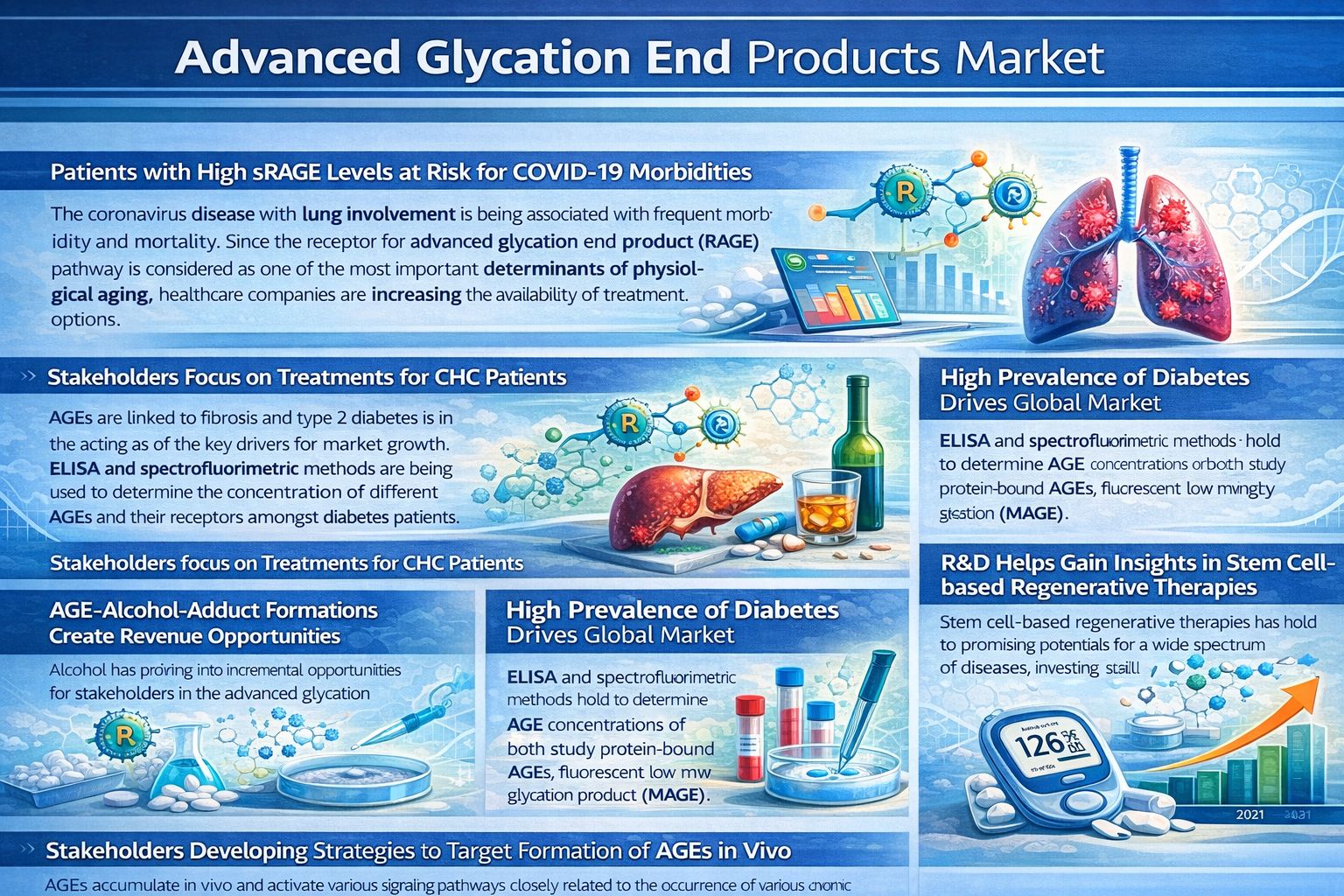
- Patients with high serum soluble-RAGE (sRAGE) levels are more likely to be exposed to COVID-19, encouraging companies to develop targeted treatment options.
- Increasing focus on treatments for chronic hepatitis C (CHC) patients due to AGE-induced fibrosis and cirrhosis.
- Rising R&D activities to explore AGE-alcohol-adduct formations and their role in organ damage.
- Growing use of ELISA and spectrofluorimetric methods for AGE detection in diabetes patients.
- Expansion of research in stem cell therapies impacted by AGE accumulation.
Investment Landscape and ROI Outlook
The AGEs market presents a moderate-to-high return on investment (ROI) due to its expanding applications across multiple therapeutic areas. Key investment highlights include:
- Strong growth potential driven by chronic disease prevalence
- Increasing funding for biotechnology and regenerative medicine research
- High demand for anti-aging and cosmetic solutions
- Opportunities in diagnostic innovation and biomarker development
Investors are particularly attracted to companies focusing on novel AGE inhibitors, RAGE pathway modulators, and precision diagnostics, which promise long-term value creation.
Market Segmentations (with Region)
By Type
- Non-fluorescent AGEs (CML, CEL, Pyrraline)
- Fluorescent AGEs (Pentosidine, MOLD)
- Others
The non-fluorescent AGEs segment dominates due to its extensive application in disease diagnostics.
By Application
- Diabetes complications
- Cancer
- Bone diseases
- Neurodegenerative diseases
- Others
By End User
- Hospitals
- Specialty clinics
- Others
By Region
- North America: Leading market due to high diabetes prevalence and advanced healthcare infrastructure
- Europe: Strong presence of pharmaceutical and cosmetic companies
- Asia Pacific: Fastest-growing region driven by increasing healthcare investments and large patient pool
- Latin America: Steady growth with improving healthcare systems, especially in Brazil
- Middle East & Africa: Emerging market with rising awareness and healthcare development
Why Buy This Report?
- Comprehensive analysis of market size, trends, and forecasts up to 2031
- Detailed insights into AGE-related disease mechanisms and treatment opportunities
- In-depth profiling of leading market players and their strategies
- Coverage of regional dynamics and emerging growth markets
- Evaluation of investment opportunities and ROI potential
- Insights into COVID-19 impact and future healthcare trends
FAQs
- What is the projected market size of the advanced glycation end products market?
The market is expected to reach US$ 2.76 billion by 2031.
- What is the expected CAGR during the forecast period?
The market is projected to grow at a CAGR of 5.4% from 2021 to 2031.
- What are the major drivers of market growth?
Key drivers include the high prevalence of diabetes, rising chronic diseases, and increasing awareness of AGE-related complications.
- Which segment dominates the market?
The non-fluorescent AGEs segment holds the largest share due to its widespread diagnostic applications.
- How is COVID-19 influencing the market?
COVID-19 has increased focus on the RAGE pathway, as patients with high sRAGE levels are more prone to severe complications, driving demand for targeted therapies.
Buy Full Report Now: https://www.transparencymarketresearch.com/checkout.php?rep_id=81706<ype=S
→Explore Latest Research Reports by Transparency Market Research:
HIV Drugs Market: https://www.transparencymarketresearch.com/hiv-drugs-market.html
Horseradish Peroxidase Market: https://www.transparencymarketresearch.com/horseradish-peroxidase-market.html
Immunotherapy Drugs Market: https://www.transparencymarketresearch.com/immunotherapy-drugs-market.html
About Transparency Market Research
Transparency Market Research, a global market research company registered at Wilmington, Delaware, United States, provides custom research and consulting services. Our exclusive blend of quantitative forecasting and trends analysis provides forward-looking insights for thousands of decision makers. Our experienced team of Analysts, Researchers, and Consultants use proprietary data sources and various tools & techniques to gather and analyses information.
Our data repository is continuously updated and revised by a team of research experts, so that it always reflects the latest trends and information. With a broad research and analysis capability, Transparency Market Research employs rigorous primary and secondary research techniques in developing distinctive data sets and research material for business reports.


Leave a Reply