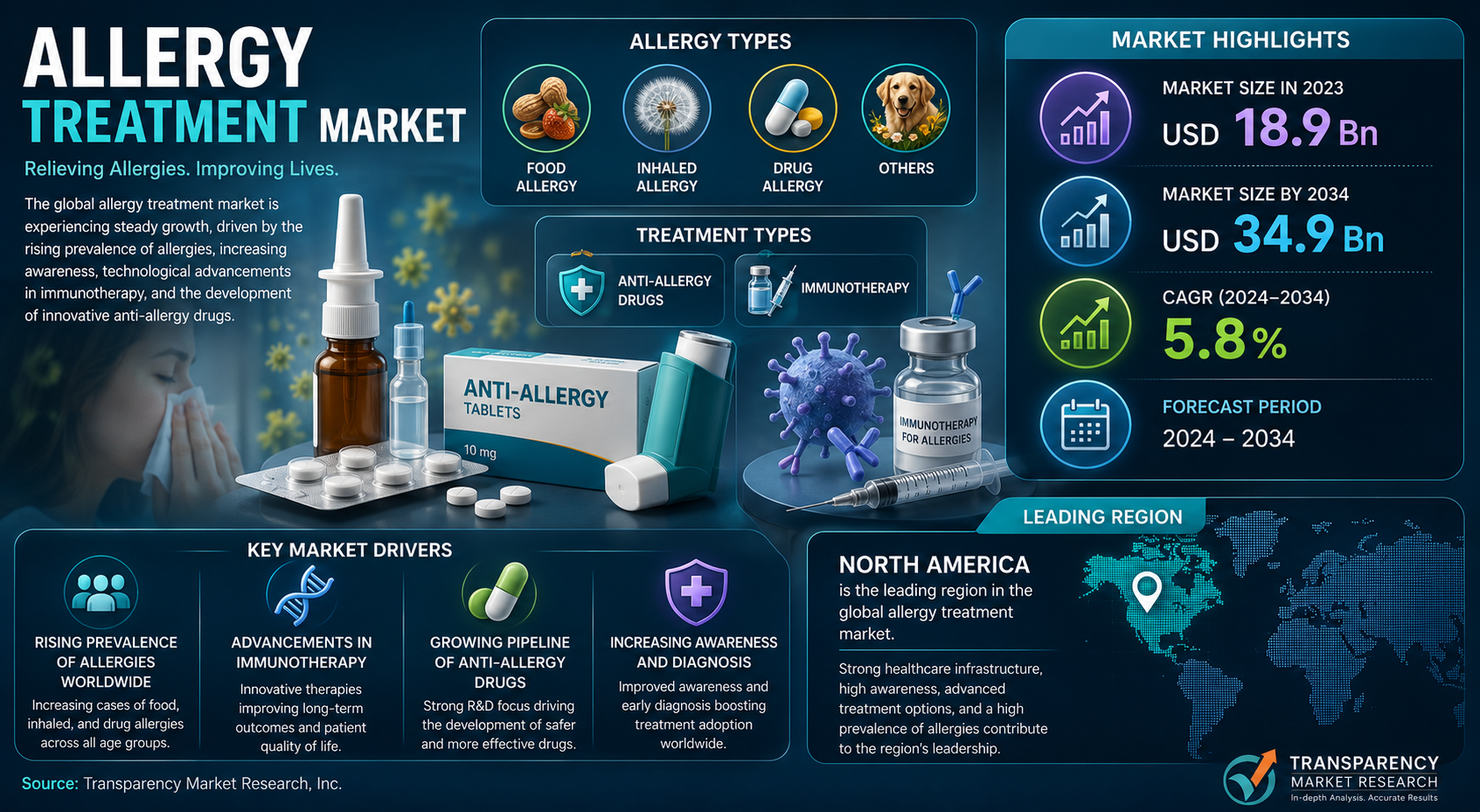
The global allergy treatment market was valued at USD 18.9 billion in 2023 and is projected to reach USD 34.9 billion by the end of 2034. The industry is anticipated to grow at a CAGR of 5.8% from 2024 to 2034, driven by the rising prevalence of allergic conditions, increasing awareness about allergy management, and advancements in treatment options, including immunotherapy and biologics.
👉 Get sample market research report copy today@ https://www.transparencymarketresearch.com/sample/sample.php?flag=S&rep_id=11357
Market Overview
Allergy treatments imply a wide array of pharmaceutical interventions, including antihistamines, corticosteroids, mast cell stabilizers, leukotriene inhibitors, immunotherapies, and auto-injectable epinephrine used to counteract hypersensitive immune responses. Triggered by otherwise harmless environmental, dietary, or chemical substances, allergies prompt the body to present mild to severe systemic symptoms. Modern allergy therapeutics are engineered to alleviate acute inflammation, reduce multi-organ symptoms, provide rapid-response emergency intervention, and desensitize the patient’s immune system over extended periods.
These specialized medical solutions are utilized across diverse applications, managing conditions such as allergic rhinitis, asthma, atopic dermatitis (skin allergies), food hypersensitivities, eye allergies, and drug-induced reactions. Anti-allergy drugs dominate the retail and over-the-counter (OTC) channels for immediate relief, while subcutaneous and sublingual immunotherapies are integrated into clinical pathways for disease-modifying, long-term care.
One of the major factors influencing market demand is the climate-induced amplification of airborne aeroallergens, such as extended and more intense pollen seasons. The industrial transition toward advanced therapeutics is being accelerated by favorable regulatory pathways authorizing non-invasive delivery models. Furthermore, expanding public health diagnostic screening, rising patient preference for self-medication, and corporate healthcare investments into targeted monoclonal antibodies are driving steady market growth.
Analysts’ Viewpoint
The allergy treatment market is gaining significant momentum from systemic structural changes in global demographics, lifestyle patterns, and clinical immunology. Rapidly industrializing urban centers report historic highs in population sensitization rates to dust mites, pollution particulates, and animal dander. These are fundamentally long-term drivers as they correlate directly with accelerating global urbanization, escalating public health chronic disease burdens, and shifting patient behaviors favoring preventative, personalized medical regimens over intermittent emergency interventions.
Technological advancements are moving allergy management past passive, short-term symptom suppression into highly precise, preventative therapeutic territories. Breakthroughs in sublingual immunotherapy (SLIT) tablets and non-invasive nasal epinephrine sprays are revolutionizing patient compliance by shifting acute and maintenance care safely from clinical environments to homecare settings. Concurrently, the clinical integration of artificial intelligence and digital health tracking applications allows specialists to monitor environmental allergen loads in real time, enabling predictive dosing protocols that dramatically reduce the severity of seasonal asthmatic and rhinitic attacks.
Analysis of Key Players
The competitive landscape features substantial capital deployment toward developing targeted biosimilars, needle-free emergency delivery platforms, and specialized allergen-specific desensitization protocols.
Leading companies operating in the global allergy treatment market include:
- AbbVie Inc.
- Aimmune Therapeutics, Inc.
- ALK-Abelló A/S
- Allergy Therapeutics plc
- AstraZeneca plc
- Bausch Health Companies Inc.
- Bayer AG
- DBV Technologies S.A.
- GlaxoSmithKline plc (GSK)
- HAL Allergy Group
- HollisterStier Allergy
- Johnson & Johnson
- LETI Pharma S.L.U.
- Merck & Co., Inc.
- Novartis AG
- Pfizer Inc.
- Regeneron Pharmaceuticals, Inc.
- Sanofi S.A.
- Stallergenes Greer plc
- Teva Pharmaceutical Industries Ltd.
- Other Prominent Players
Strategic partnerships and distribution expansions remain highly prevalent themes. Industry leaders focus intensely on securing co-development agreements to fast-track regional regulatory approvals for food allergy therapies and next-generation molecular biologics across heavily populated urban markets.
Recent Developments (2025-2026)
- Early 2026: Regulatory bodies approved next-generation nasal epinephrine sprays, providing needle-free, needle-anxiety-free adrenaline delivery formats for patients experiencing acute anaphylactic episodes.
- Late 2025: Leading immunotherapy firms finalized major clinical trial phases for advanced multi-allergen sublingual tablets, allowing simultaneous desensitization against multiple distinct grass and tree pollens.
- Mid-2025: Major pharmaceutical companies introduced interchangeable omalizumab biosimilars, substantially expanding patient access to advanced biologic therapies while driving down overall market pricing across the monoclonal antibody sector.
👉 Discuss Implications for Your Industry Request Sample Research Report PDF@ https://www.transparencymarketresearch.com/sample/sample.php?flag=B&rep_id=11357
Key Developments & Trends
- Biologics & Monoclonal Antibodies: Rapid growth in targeted biological therapies designed to inhibit specific inflammatory pathways in patients suffering from severe, treatment-resistant allergic asthma and atopic dermatitis.
- Needle-Free Epinephrine Formats: The commercialization of stable, highly bioavailable intranasal emergency sprays to completely replace traditional auto-injector syringes for severe systemic reactions.
- Personalized Immunotherapy (AIT): Widespread implementation of allergen-specific therapies custom-formulated to match the unique molecular sensitization profile of individual patients.
- Halogen-Free and Eco-Friendly Inhalers: Transitioning respiratory allergy therapies toward green propellants with ultra-low global warming potential to comply with tightening international environmental manufacturing mandates.
- Ecosystem-Linked Telehealth: Linking wearable health trackers and digital smart-inhalers with remote clinical platforms to automatically adjust treatment plans based on local environmental air quality indexes.
Challenges
- High Cost of Advanced Biologics: The steep ongoing financial commitment required for premium monoclonal antibody treatments and personalized immunotherapy regimens limits accessibility for low-income demographics.
- Rigid Regulatory Approval Timelines: Navigating slow, highly sensitive global pharmacopeia validation frameworks regarding pediatric safety testing for newly formulated allergen therapies.
- Underdiagnosis in Emerging Markets: Limited public health screening infrastructure and a lack of specialized allergy clinics across developing rural regions leave massive patient pools untreated or mismanaged.
- Reimbursement Friction: Fragmented insurance coverage and high deductibles for long-term desensitization programs push patients toward less effective, short-term OTC medication cycles.
Opportunities
- Pediatric Food Allergen Immunotherapy: Enormous commercial potential for introducing standardized oral desensitization products targeting widespread pediatric peanut, dairy, and egg hypersensitivities.
- OTC Market Expansion in Emerging Economies: Supplying affordable, non-drowsy second- and third-generation antihistamine portfolios to rapidly expanding retail and digital pharmacy channels across Latin America and Asia-Pacific.
- Climate-Adaptive Respiratory Portfolios: Developing targeted, high-efficacy nasal corticosteroids optimized specifically to combat the escalating global burden of severe, pollution-linked seasonal allergic rhinitis.
- Corporate Wellness Integration: Partnering with enterprise employers and public entities to deploy smart corporate diagnostic screening and preventative allergy therapies to mitigate productivity loss.
Market Segmentation
➤ By Type
- Allergic Rhinitis (Leading Segment – Dominating volume demand due to its massive global prevalence and direct ties to worsening air pollution and pollen loads)
- Allergic Asthma (High Value Segment – Accounting for a substantial share of therapeutic revenue due to the critical nature of prescription inhalers and biologics)
- Food Allergy (Fastest Growing Segment – Surging significantly due to rising pediatric incidence and breakthrough desensitization therapies)
- Skin, Eye, & Other Allergies (Steady Segment – Driven by cosmetic sensitivities, contact dermatitis, and environmental conjunctivitis)
➤ By Treatment
- Anti-Allergy Drugs (Antihistamines, Corticosteroids) (Leading Segment ~62% share – Maintaining volume dominance due to widespread OTC availability and immediate symptom relief capabilities)
- Immunotherapy (SCIT, SLIT) (Fastest Growing Segment – Experiencing rapid clinical adoption as consumers seek long-term, disease-modifying curative care)
➤ By Distribution Channel
- Retail & Online Pharmacies (Fastest Growing – Expanding at an accelerated rate due to the rising trend of patient self-medication, e-pharmacy convenience, and OTC switches)
- Hospital Pharmacies (Leading Value Channel – Remaining primary for complex biological administrations, severe emergency cases, and diagnostic testing fulfillment)
Conclusion
The allergy treatment industry stands as a critical pillar of modern chronic healthcare management and precision immunology. Through 2036, long-term market dominance will be strictly dictated by molecular pharmacology and patient-centric delivery innovation. As global healthcare systems move away from temporary, reactive symptom masking toward proactive, curative desensitization networks, the pharmaceutical innovators that master targeted biologic pathways, non-invasive emergency delivery formats, and scalable, personalized immunotherapies will shape the next decade of the healthcare landscape.
👉 To buy this comprehensive market research report, click here to inquire@ https://www.transparencymarketresearch.com/checkout.php?rep_id=11357<ype=S
About Transparency Market Research
Transparency Market Research, a global market research company registered at Wilmington, Delaware, United States, provides custom research and consulting services. Our exclusive blend of quantitative forecasting and trends analysis provides forward-looking insights for thousands of decision makers. Our experienced team of Analysts, Researchers, and Consultants use proprietary data sources and various tools & techniques to gather and analyses information.
Our data repository is continuously updated and revised by a team of research experts, so that it always reflects the latest trends and information. With a broad research and analysis capability, Transparency Market Research employs rigorous primary and secondary research techniques in developing distinctive data sets and research material for business reports.
Contact:
Abhishek Budholiya
Transparency Market Research Inc.
State Tower, 90 State Street, Suite 700,
Albany NY – 12207, United States
Tel: +1-518-618-1030
USA – Canada Toll Free: 866-552-3453
Website: https://www.transparencymarketresearch.com
Sales Inquiries: sales@transparencymarketresearch.com
Media Inquiries: media@transparencymarketresearch.com



Leave a Reply