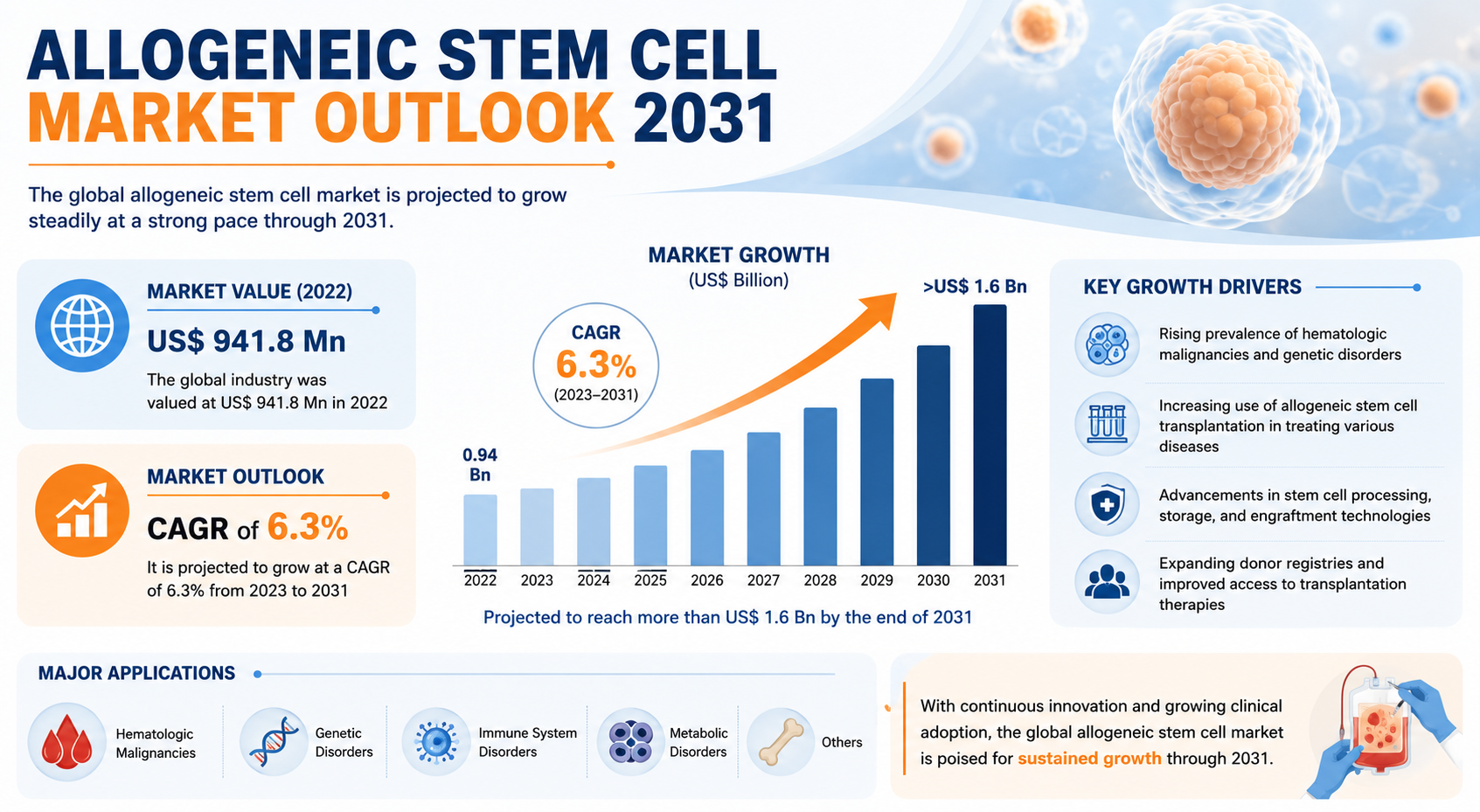
The global allogeneic stem cell market is witnessing strong growth momentum as advancements in regenerative medicine, stem cell research, and cellular therapies continue to transform modern healthcare. According to recent market analysis, the global allogeneic stem cell industry was valued at US$ 941.8 Mn in 2022 and is projected to surpass US$ 1.6 Bn by the end of 2031, expanding at a CAGR of 6.3% during the forecast period from 2023 to 2031.
The market is benefiting from the increasing prevalence of chronic diseases, rapid progress in stem cell technologies, rising investments in regenerative medicine, and growing interest in personalized treatment approaches. In addition, ongoing collaborations among biotechnology companies, research institutions, and pharmaceutical firms are accelerating innovation in allogeneic cell therapies.
Examine key highlights and takeaways from our Report in this sample –
https://www.transparencymarketresearch.com/sample/sample.php?flag=S&rep_id=85776
Market Overview
Allogeneic stem cell transplantation, commonly referred to as allogeneic hematopoietic stem cell transplantation (HSCT), is a medical procedure involving the transfer of stem cells from a healthy donor to a patient for the treatment of various life-threatening diseases and disorders.
The donor may be a sibling, family member, or unrelated individual with a matching human leukocyte antigen (HLA) profile. HLA compatibility is essential to reduce complications such as graft rejection and graft-versus-host disease (GvHD).
Stem cells utilized in allogeneic transplantation are derived from multiple sources, including:
- Bone marrow
- Peripheral blood stem cells (PBSCs)
- Umbilical cord blood
- Adipose tissue
- Placental tissues
Historically, bone marrow was the primary stem cell source; however, PBSCs and umbilical cord blood have gained widespread adoption due to easier collection procedures and improved stem cell yield.
Allogeneic stem cell transplantation has emerged as a promising therapeutic option for treating hematological malignancies, autoimmune diseases, musculoskeletal disorders, cardiovascular diseases, and regenerative medicine applications.
Market Size and Forecast Outlook
The allogeneic stem cell market has experienced consistent expansion over the last decade due to rising clinical adoption and technological breakthroughs in cell therapy development.
The industry reached a valuation of US$ 941.8 Mn in 2022 and is forecast to exceed US$ 1.6 Bn by 2031. The anticipated CAGR of 6.3% reflects growing investments in stem cell therapies, increasing clinical trials, and expanding therapeutic applications.
Healthcare systems worldwide are focusing on regenerative medicine solutions to address unmet clinical needs, especially in oncology, immune disorders, and degenerative diseases. This shift is expected to significantly strengthen market demand over the coming years.
Key Market Growth Drivers
Increase in Prevalence of Chronic Diseases
The rising burden of chronic diseases is one of the major drivers propelling demand for allogeneic stem cell therapies. Conditions such as leukemia, lymphoma, multiple myeloma, autoimmune disorders, osteoarthritis, and cardiovascular diseases continue to increase globally.
Traditional treatment methods often provide limited long-term outcomes for these diseases, leading healthcare providers and researchers to explore regenerative therapies capable of repairing damaged tissues and restoring biological function.
Allogeneic stem cell transplantation offers promising therapeutic potential through immune system restoration, tissue regeneration, and anti-inflammatory properties.
Advances in Stem Cell Research
Rapid progress in stem cell biology and regenerative medicine technologies is significantly contributing to market growth.
Researchers have achieved substantial advancements in understanding stem cell differentiation, proliferation, and therapeutic applications. The discovery of new stem cell sources such as mesenchymal stem cells (MSCs) derived from adipose tissue, placenta, and umbilical cord blood has expanded treatment possibilities.
Technological innovations including:
- Ex vivo cell expansion
- Stem cell purification
- Cryopreservation
- Cell culture optimization
- Gene editing integration
have improved the quality, scalability, and clinical utility of allogeneic stem cells.
These innovations are helping overcome previous limitations associated with cell availability and transplantation efficiency.
Growth in Regenerative Medicine Investments
Investment in regenerative medicine has increased significantly in recent years as governments, biotechnology firms, and healthcare investors recognize the transformative potential of stem cell therapies.
Funding for stem cell research, clinical trials, and advanced manufacturing facilities is accelerating product development and commercialization efforts. Public-private partnerships and strategic collaborations are also supporting innovation across the allogeneic stem cell ecosystem.
The growing integration of allogeneic stem cells with immunotherapy and gene editing technologies is expected to create new therapeutic opportunities and expand market potential.
Rise in Demand for Personalized Medicine
Personalized medicine is becoming a major trend in healthcare, with treatment approaches increasingly tailored to individual patient characteristics and disease profiles.
Allogeneic stem cell therapies are being explored as customizable therapeutic solutions capable of addressing complex diseases with improved clinical outcomes. This trend is expected to further strengthen adoption across oncology, autoimmune disorders, and regenerative medicine applications.
Therapeutic Potential of Allogeneic Stem Cell Transplantation
Allogeneic stem cell transplantation has become a critical treatment approach for hematological malignancies including leukemia, lymphoma, and multiple myeloma.
The procedure offers the potential for long-term remission and disease control, particularly in patients who fail to respond to conventional therapies. One of the major advantages of allogeneic transplantation is the graft-versus-leukemia effect, in which donor immune cells attack residual cancer cells.
Beyond oncology, allogeneic stem cell therapies are increasingly being investigated for:
- Autoimmune diseases
- Musculoskeletal disorders
- Cardiovascular diseases
- Neurodegenerative disorders
- Pulmonary diseases
- Genetic disorders
The regenerative and immunomodulatory properties of stem cells provide opportunities for tissue repair, inflammation control, and organ regeneration.
Surge in Demand for T-cell Depleted Transplant Procedures
The T-cell depleted transplant segment is expected to dominate the global allogeneic stem cell market during the forecast period.
T-cell depletion is a specialized transplantation technique used to minimize the risk of graft-versus-host disease (GvHD), one of the most serious complications associated with allogeneic transplantation.
By removing T-cells from donor grafts, healthcare providers can significantly reduce immune-related complications while improving transplantation outcomes.
The increasing adoption of T-cell depletion technologies reflects the healthcare industry’s focus on enhancing patient safety and improving long-term treatment success rates.
Regenerative Properties of Adipose Tissue-derived Stem Cells
Adipose tissue-derived stem cells are gaining significant attention due to their strong regenerative and immunomodulatory capabilities.
Adipose tissue serves as a rich source of mesenchymal stem cells that can differentiate into multiple cell types including:
- Adipocytes
- Chondrocytes
- Osteocytes
These stem cells are increasingly being explored for tissue repair, orthopedic therapies, wound healing, and regenerative medicine applications.
The accessibility and abundance of adipose tissue make it an attractive source for stem cell harvesting and therapeutic development.
Increase in Musculoskeletal Disease Applications
Musculoskeletal disorders such as osteoarthritis, rheumatoid arthritis, tendinopathy, and bone fractures are creating significant growth opportunities for allogeneic stem cell therapies.
Stem cells possess regenerative and anti-inflammatory properties that may help repair damaged tissues, reduce pain, and improve mobility in patients suffering from chronic musculoskeletal conditions.
As aging populations continue to rise globally, the prevalence of musculoskeletal diseases is expected to increase substantially, driving long-term market demand.
Rise in Preference for Hospitals as Key End-users
Hospitals remain the dominant end-user segment within the allogeneic stem cell market due to their advanced infrastructure, specialized medical expertise, and patient monitoring capabilities.
Stem cell transplantation procedures require sophisticated healthcare facilities, highly trained professionals, and strict safety protocols to ensure effective treatment administration.
Hospitals also play a critical role in conducting clinical trials, post-transplant monitoring, and multidisciplinary patient care, making them essential participants in the market ecosystem.
Regional Outlook
North America
North America is expected to dominate the global allogeneic stem cell market during the forecast period.
The region benefits from:
- Advanced healthcare infrastructure
- Strong regulatory frameworks
- High investment in biotechnology
- Presence of leading research institutions
- Extensive clinical trial activities
The United States and Canada continue to lead innovation in regenerative medicine and stem cell therapy development.
Europe
Europe is projected to witness steady market growth owing to increasing stem cell research initiatives and supportive healthcare systems.
Countries such as Germany, the U.K., and France are actively supporting stem cell therapy development through scientific collaborations, government funding, and advanced clinical research programs.
Asia Pacific
Asia Pacific is emerging as a high-growth region due to improving healthcare infrastructure, expanding biotechnology industries, and rising research activities.
China, Japan, and South Korea are making significant investments in stem cell research and clinical applications, positioning the region as a major future growth hub.
Analysis of Key Players and Strategies
The global allogeneic stem cell market is fragmented and highly competitive, with numerous biotechnology and pharmaceutical companies actively pursuing innovation and strategic expansion.
Major companies operating in the market include:
- Mesoblast Limited
- Gamida Cell Ltd.
- Novartis International AG
- Cellectis SA
- Fate Therapeutics Inc.
- Takeda Pharmaceutical Company Limited
- Celularity Inc.
- Orchard Therapeutics plc
Key Player Strategies
Leading market participants are implementing several strategic initiatives, including:
Strategic Collaborations and Partnerships
Companies are increasingly partnering with biotechnology firms and research organizations to accelerate development of next-generation allogeneic therapies.
Research & Development Investments
Heavy investments in clinical trials, gene editing technologies, and cell engineering are helping companies expand their therapeutic pipelines.
Mergers and Acquisitions
Market participants are pursuing acquisitions to strengthen product portfolios, gain access to proprietary technologies, and expand geographic presence.
Integration with Immunotherapy
The integration of allogeneic stem cells with CAR-T therapies and immunotherapies is emerging as a major innovation trend in the industry.
Recent Developments
In May 2023, StemCyte announced a collaboration deal with Cytoimmune Therapeutics, a U.S.-based immune cell treatment firm, to supply the latter with cellular resources for the development of allogeneic cell therapy products globally.
In August 2022, Poseida Therapeutics, Inc., a biopharmaceutical company in the clinical stage, partnered with Roche. The collaboration specifically aims to develop allogeneic CAR-T therapies that target hematologic malignancies.
In August 2021, Kite Pharma, Inc., a subsidiary of Gilead Sciences, Inc., announced a collaborative partnership and licensing agreement with Appia Bio, Inc., which is an emerging biotechnology firm focused on the development of engineered allogeneic cell therapies sourced from hematopoietic stem cells (HSCs) for individuals with cancer.
Investment Landscape and ROI Outlook
The allogeneic stem cell market is attracting substantial investments from venture capital firms, pharmaceutical companies, and institutional investors due to its strong long-term growth potential.
Investments are primarily directed toward:
- Clinical research programs
- Stem cell manufacturing technologies
- Cell therapy platforms
- Gene editing integration
- Regenerative medicine infrastructure
As commercialization pathways improve and regulatory approvals increase, investors are expected to witness favorable returns on investment from innovative stem cell therapy companies.
The increasing demand for advanced regenerative therapies and personalized medicine solutions positions the market for sustained long-term expansion.
Market Segmentation
By Type
- Unmodified Stem Cell Transplant
- T-cell Depleted Transplant
- Cord Blood Transplant
- Donor Lymphocyte Infusion (DLI)
By Cell Source
- Bone Marrow
- Peripheral Blood Stem Cell (PBSC)
- Umbilical Cord Blood
- Adipose Tissue
- Placenta
By Application
- Musculoskeletal Disease
- Cardiovascular Disease
- Autoimmune Disease
- Oncology
- GvHD
- Neuro Disorder and Pulmonary Disease
By End-user
- Hospital
- Ambulatory Surgical Center
- Cancer Center
- Research Institute
By Region
- North America
- Europe
- Asia Pacific
- Latin America
- Middle East & Africa
Why Buy This Report?
- Gain comprehensive analysis of the global allogeneic stem cell market
- Understand current and future market trends through 2031
- Analyze key growth drivers, restraints, and emerging opportunities
- Evaluate competitive landscape and company strategies
- Access detailed regional and segment-wise market forecasts
- Identify investment opportunities in regenerative medicine
- Monitor technological advancements and clinical developments
- Support strategic business planning and expansion initiatives
Frequently Asked Questions (FAQs)
1. What is driving the growth of the allogeneic stem cell market?
The market is driven by increasing chronic disease prevalence, advancements in stem cell research, rising regenerative medicine investments, and growing demand for personalized therapies.
2. What is the projected value of the allogeneic stem cell market by 2031?
The market is projected to surpass US$ 1.6 Billion by the end of 2031.
3. Which region dominates the allogeneic stem cell market?
North America currently dominates the market due to advanced healthcare infrastructure, strong research capabilities, and extensive clinical trial activities.
4. What are the major applications of allogeneic stem cell therapies?
Major applications include oncology, musculoskeletal diseases, autoimmune disorders, cardiovascular diseases, and regenerative medicine.
5. Which companies are leading the allogeneic stem cell market?
Key players include Mesoblast Limited, Gamida Cell Ltd., Novartis International AG, Fate Therapeutics Inc., Takeda Pharmaceutical Company Limited, and Celularity Inc.





Leave a Reply