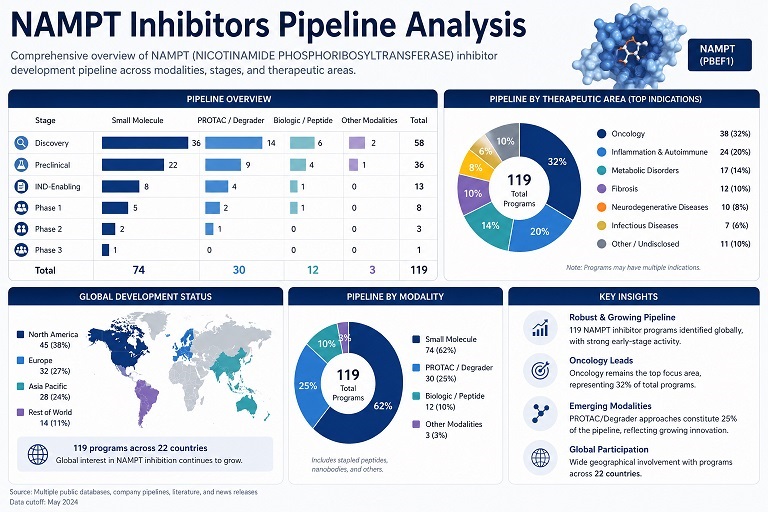
The NAMPT Inhibitors Pipeline Analysis highlights a growing area of interest in the pharmaceutical and biotechnology industries, particularly within oncology drug development. Nicotinamide phosphoribosyltransferase (NAMPT) is a crucial enzyme involved in the biosynthesis of nicotinamide adenine dinucleotide (NAD+), a key molecule required for cellular metabolism, DNA repair, and energy production. Targeting NAMPT has emerged as a promising strategy to disrupt cancer cell survival, as tumor cells heavily rely on NAD+ for rapid growth and proliferation.
With increasing research into metabolic pathways and cancer vulnerabilities, NAMPT inhibitors are gaining traction as potential next-generation therapeutics. Although early-stage candidates encountered setbacks, ongoing innovations are reshaping the pipeline landscape.
Download PDF Brochure: https://www.transparencymarketresearch.com/sample/sample.php?flag=S&rep_id=85238
Role of NAMPT in Cellular Metabolism
NAMPT plays a vital role in the NAD+ salvage pathway, converting nicotinamide into nicotinamide mononucleotide (NMN), which is subsequently transformed into NAD+. This coenzyme is essential for multiple biological processes, including redox reactions, mitochondrial function, and genomic stability.
Cancer cells exhibit increased dependence on NAD+ due to their heightened metabolic demands. As a result, inhibiting NAMPT leads to rapid depletion of NAD+ levels, causing energy crisis, oxidative stress, and ultimately apoptosis in malignant cells. This mechanism forms the scientific basis for the development of NAMPT inhibitors.
Key Players:
- Onxeo
- Aqualung Therapeutics
- Antengene Corporation
- OncoTartis, Inc.
- Karyopharm Therapeutics
Pipeline Overview
The NAMPT inhibitors pipeline consists of a mix of early-stage and mid-stage drug candidates, with a strong focus on oncology indications. While only a limited number of molecules have reached clinical trials, the pipeline is evolving with the introduction of more selective and potent compounds.
Key Pipeline Candidates
FK866 (Daporinad): One of the earliest and most studied NAMPT inhibitors, demonstrating potent anticancer activity in preclinical and early clinical studies. However, challenges such as toxicity and short half-life have limited its progress.
CHS828 (GMX1777): Another first-generation inhibitor that showed promising preclinical results but faced clinical limitations due to safety concerns.
GMX1778: A prodrug of CHS828 developed to improve pharmacokinetic properties and enhance bioavailability.
KPT-9274: A novel dual inhibitor targeting both NAMPT and PAK4, offering a multi-pronged approach to cancer treatment. This candidate is currently under clinical investigation for solid tumors and hematologic malignancies.
Next-Generation NAMPT Inhibitors: These include structurally optimized molecules and targeted degradation approaches such as PROTACs, designed to improve specificity and reduce adverse effects.
Buy this Premium Research Report: https://www.transparencymarketresearch.com/checkout.php?rep_id=85238<ype=S
Pipeline Segmentation
Phase
- Phase II
- Phase I/II
- Phase I
- Preclinical
Application
- Oncology
- Others (respiratory and neurology disorders)
Type of Molecule
- Small Molecules
- Biologics
Recent Developments and Trends
Advancements in Drug Design
Improved understanding of NAMPT’s structure has enabled the design of more selective inhibitors with enhanced binding affinity and reduced toxicity. Structure-based drug design is playing a key role in optimizing candidate molecules.
Combination Therapy Strategies
NAMPT inhibitors are increasingly being studied in combination with other anticancer agents such as chemotherapy, targeted therapies, and immunotherapies. These combinations help improve therapeutic outcomes and overcome resistance mechanisms.
Emergence of Targeted Delivery
To minimize systemic toxicity, researchers are exploring targeted delivery systems such as nanoparticle-based carriers and tumor-specific activation strategies.
PROTAC-Based Approaches
The introduction of PROTAC (Proteolysis Targeting Chimeras) technology represents a breakthrough in the pipeline. Instead of inhibiting NAMPT, these molecules promote its degradation, offering improved selectivity and sustained therapeutic effects.
Challenges in the Pipeline
Despite promising advancements, the NAMPT inhibitors pipeline faces several challenges:
Toxicity Issues
Since NAMPT is essential for normal cell function, systemic inhibition can lead to adverse effects, limiting therapeutic dosage and application.
Limited Selectivity
Achieving tumor-specific targeting remains a major hurdle, as normal cells also rely on NAD+ metabolism.
Drug Resistance
Cancer cells may activate alternative NAD+ biosynthesis pathways, reducing the effectiveness of NAMPT inhibitors.
Pharmacokinetic Limitations
Early compounds showed issues such as short half-life and poor bioavailability, necessitating improved formulations.
Future Outlook
The future of the NAMPT inhibitors pipeline appears promising, driven by advancements in precision medicine and targeted therapy approaches. With increasing focus on biomarker-driven patient selection and personalized treatment strategies, the clinical success rate of NAMPT inhibitors is expected to improve.
Next-generation molecules with enhanced selectivity, better pharmacokinetics, and reduced toxicity are likely to overcome previous limitations. Additionally, expanding research into non-oncology indications could further broaden the scope of this therapeutic class.
Conclusion
NAMPT inhibitors represent a compelling and innovative approach to targeting cancer metabolism. While early-stage challenges slowed initial progress, the pipeline is undergoing significant transformation with the development of advanced drug candidates and novel therapeutic strategies.
Ongoing research, coupled with technological advancements such as PROTACs and combination therapies, is expected to unlock new opportunities in this field. As the understanding of NAD+ metabolism continues to evolve, NAMPT inhibitors are poised to play a crucial role in the future of targeted therapeutics.
Frequently Asked Questions (FAQs)
1.What is NAMPT and why is it important?
NAMPT (Nicotinamide Phosphoribosyltransferase) is a key enzyme involved in the NAD+ biosynthesis pathway. It plays a critical role in maintaining cellular energy metabolism, DNA repair, and cell survival, making it an important target in drug development.
2.What are NAMPT inhibitors used for?
NAMPT inhibitors are primarily being developed for cancer treatment. They are also being explored for potential use in metabolic disorders and inflammatory diseases due to their impact on cellular metabolism.
3.How do NAMPT inhibitors affect cancer cells?
NAMPT inhibitors reduce NAD+ levels inside cells, which disrupts energy production and metabolic processes. Cancer cells, which have higher metabolic demands, are more susceptible to this disruption, leading to cell death.
4.Which are the leading NAMPT inhibitors in the pipeline?
Some of the key candidates include FK866 (Daporinad), CHS828 (GMX1777), GMX1778, and KPT-9274. These drugs are at different stages of research and clinical development.
5 What stage of development are NAMPT inhibitors in?
Most NAMPT inhibitors are currently in preclinical or early clinical stages (Phase I and Phase II). Only a limited number of candidates have advanced to human trials.
More Trending Reports by Transparency Market Research –
Vaccines Market – https://www.transparencymarketresearch.com/global-vaccine-market.html
CAR T-cell Therapy Market – https://www.transparencymarketresearch.com/car-t-cell-therapy-market.html
Non-Small Cell Lung Cancer Therapeutics Market – https://www.transparencymarketresearch.com/non-small-cell-lung-cancer-market.html
Media Contact:
Abhishek Budholiya
Transparency Market Research Inc.
State Tower, 90 State Street, Suite 700,
Albany NY – 12207, United States
Tel: +1-518-618-1030
USA – Canada Toll Free: 866-552-3453
Website: https://www.transparencymarketresearch.com
Sales Inquiries: sales@transparencymarketresearch.com
Media Inquiries: media@transparencymarketresearch.com



Leave a Reply