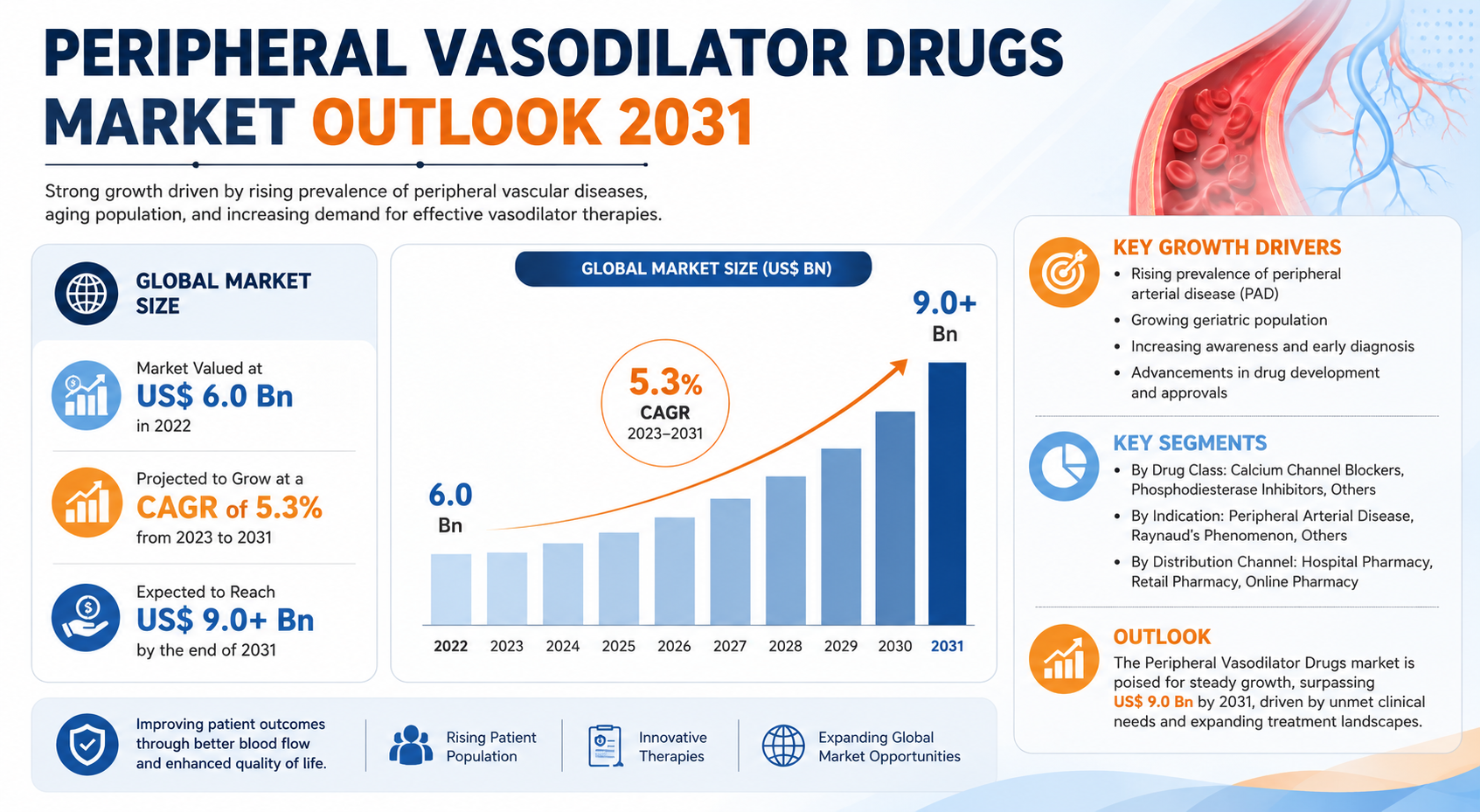
The global peripheral vasodilator drugs market was valued at US$ 6.0 billion in 2022 and is projected to reach over US$ 9.0 billion by 2031, expanding at a compound annual growth rate (CAGR) of 5.3% during the forecast period from 2023 to 2031. This steady growth reflects increasing demand for effective cardiovascular therapies, particularly those targeting peripheral vascular conditions such as hypertension, angina, and peripheral artery disease (PAD).
The market’s expansion is supported by demographic shifts, especially the rapid growth of the aging population, and the rising prevalence of chronic lifestyle-related diseases worldwide.
Explore the highlights and essential data from our Report in this sample –
https://www.transparencymarketresearch.com/sample/sample.php?flag=S&rep_id=85487
Market Overview
Peripheral vasodilator drugs are a class of medications designed to relax and widen blood vessels, thereby improving blood circulation in peripheral tissues. These drugs play a crucial role in the treatment of a wide range of conditions including hypertension, Raynaud’s disease, erectile dysfunction, and PAD.
The market encompasses multiple drug types such as calcium channel blockers (CCBs), direct-acting vasodilators, alpha-adrenergic blockers, potassium channel activators, and nitrates. Among these, calcium channel blockers currently dominate due to their widespread use as first-line therapy in hypertension management.
In terms of distribution channels, online pharmacies are emerging as a leading segment, driven by increasing digital adoption, convenience, and competitive pricing.
Geographically, North America leads the market, while Asia Pacific is expected to witness the fastest growth due to improving healthcare infrastructure and rising disease prevalence.
Key Market Growth Drivers
The global peripheral vasodilator drugs market is primarily driven by a combination of epidemiological, technological, and socio-economic factors:
1. Rising Prevalence of Cardiovascular Diseases
The increasing incidence of hypertension and cardiovascular disorders is a major growth catalyst. With over a billion individuals affected globally, the demand for effective vasodilator therapies continues to rise significantly.
2. Growth in Geriatric Population
Aging populations are more susceptible to vascular diseases such as angina and PAD. This demographic trend is fueling sustained demand for peripheral vasodilators.
3. Sedentary Lifestyles and Poor Dietary Habits
Modern lifestyle patterns, including lack of physical activity and unhealthy diets, are contributing to increased cardiovascular risks, thereby boosting the need for long-term pharmacological interventions.
4. Technological Advancements in Drug Development
Innovations such as computer-aided drug design (CADD), gene editing technologies like CRISPR, and advanced imaging techniques (e.g., PET scans) are accelerating the discovery of safer and more effective drugs.
5. Increased Awareness and Early Diagnosis
Government and healthcare initiatives aimed at promoting early diagnosis and treatment of vascular diseases are contributing to higher drug adoption rates.
Analysis of Key Players – Key Player Strategies
The peripheral vasodilator drugs market is highly competitive, with several global pharmaceutical giants actively engaged in strengthening their market position. Leading companies include:
- Pfizer, Inc.
- Novartis AG
- GSK plc
- AstraZeneca
- Merck & Co., Inc.
- Sanofi
- Bayer AG
- Abbott Laboratories
- Bristol-Myers Squibb Company
- Boehringer Ingelheim International GmbH
- Teva Pharmaceutical Industries Ltd.
- Viatris, Inc.
- Sun Pharmaceutical Industries Ltd.
- Lupin
Strategic Focus Areas:
- Product Innovation: Companies are investing heavily in developing next-generation vasodilators, including nitric oxide-based therapies with improved efficacy.
- Mergers & Acquisitions: Strategic acquisitions are enabling companies to expand their product portfolios and global reach.
- Collaborations & Partnerships: Joint ventures with biotech firms and research institutions are accelerating drug discovery and clinical trials.
- Geographic Expansion: Companies are targeting emerging markets in Asia Pacific and Latin America to tap into unmet medical needs.
- Digital Integration: Leveraging data analytics and AI to streamline R&D and enhance clinical outcomes.
Market Challenges & Opportunities
Challenges:
- Stringent Regulatory Requirements: Drug approval processes are lengthy and costly, potentially delaying market entry.
- Side Effects and Safety Concerns: Some vasodilators may cause adverse effects such as hypotension, dizziness, or headaches.
- Generic Competition: The availability of low-cost generic drugs can impact profit margins for branded products.
- Limited Awareness in Developing Regions: Despite rising prevalence, lack of awareness and access to healthcare services can hinder market growth.
Opportunities:
- Emerging Markets Growth: Expanding healthcare infrastructure in developing countries presents significant opportunities.
- Advancements in Personalized Medicine: Tailored therapies based on genetic profiling could revolutionize treatment outcomes.
- Digital Health Integration: Telemedicine and e-pharmacies are enhancing drug accessibility.
- R&D in Novel Drug Classes: Focus on nitric oxide donors and targeted therapies offers promising future prospects.
Key Player Strategies
To remain competitive, market players are adopting multi-faceted strategies:
- Investment in Research & Development to introduce innovative drug formulations
- Expansion of Online Pharmacy Presence to cater to digital consumers
- Strategic Licensing Agreements to accelerate product commercialization
- Focus on Cost Optimization to remain competitive against generics
- Strengthening Supply Chain Networks to ensure global accessibility
These strategies are enabling companies to maintain a strong foothold in a rapidly evolving healthcare landscape.
Recent Developments
- On August 18, 2022, GenFleet Therapeutics, a biotech firm in its clinical development stage with a focus on innovative treatments in the fields of oncology and immunology, announced that the U.S. Food and Drug Administration (FDA) granted its clinical trial application for GFH312 in a randomized, double-blinded, placebo-controlled phase II monotherapy study. The clinical trial will be conducted at 15 research centers, including the University of Colorado Anschutz Medical Campus, in patients suffering from peripheral artery disease and intermittent claudication. GenFleet had previously conducted phase I trials of GFH312 in Australia.
- In January 2021, Novartis AG announced a collaboration with Blackstone Life Sciences to establish a new company Anthos Therapeutics, Inc., focused on the development of therapeutics for cardiovascular diseases, including peripheral artery disease.
Investment Landscape and ROI Outlook
The peripheral vasodilator drugs market presents a stable and attractive investment opportunity due to its consistent demand and moderate growth trajectory.
Investment Highlights:
- Predictable Revenue Streams: Chronic conditions ensure long-term drug usage.
- Strong Pipeline Opportunities: Continuous R&D investments are expected to yield high-value drug candidates.
- Emerging Market Potential: Rapid urbanization and healthcare expansion offer high ROI potential.
- Technological Integration: AI-driven drug discovery can significantly reduce development costs and timelines.
Investors can expect steady returns, particularly from companies focusing on innovation and geographic diversification.
Market Segmentations
By Drug Type:
- Calcium Channel Blockers
- Direct-acting Vasodilators
- Alpha-adrenergic Blockers
- Potassium Channel Activators
- Nitrates
- Others
By Distribution Channel:
- Hospital Pharmacies
- Retail Pharmacies
- Online Pharmacies
By Region:
- North America: Dominant market due to high disease prevalence and advanced healthcare systems
- Europe: Mature market with strong presence of established players
- Asia Pacific: Fastest-growing region driven by large population and rising healthcare access
- Latin America: Emerging market with improving infrastructure
- Middle East & Africa: Gradual growth supported by healthcare investments
Why Buy This Report?
- Gain comprehensive insights into market size, growth trends, and forecasts
- Understand key drivers, challenges, and opportunities shaping the industry
- Analyze competitive landscape and key player strategies
- Access detailed segmentation and regional analysis
- Stay updated with recent developments and technological advancements
- Identify investment opportunities and ROI potential
This report serves as a valuable resource for stakeholders, investors, pharmaceutical companies, and healthcare professionals seeking strategic insights.
FAQs
1. What are peripheral vasodilator drugs used for?
They are used to treat conditions involving narrowed blood vessels, such as hypertension, angina, peripheral artery disease, and Raynaud’s disease.
2. What is driving the growth of this market?
Key drivers include rising cardiovascular disease prevalence, aging population, and advancements in drug development technologies.
3. Which segment dominates the market?
Calcium channel blockers dominate due to their effectiveness and widespread use in hypertension treatment.
4. Which region holds the largest market share?
North America currently leads the market, while Asia Pacific is expected to grow the fastest.
5. What are the future opportunities in this market?
Opportunities lie in emerging markets, personalized medicine, digital healthcare integration, and development of novel drug therapies.




Leave a Reply