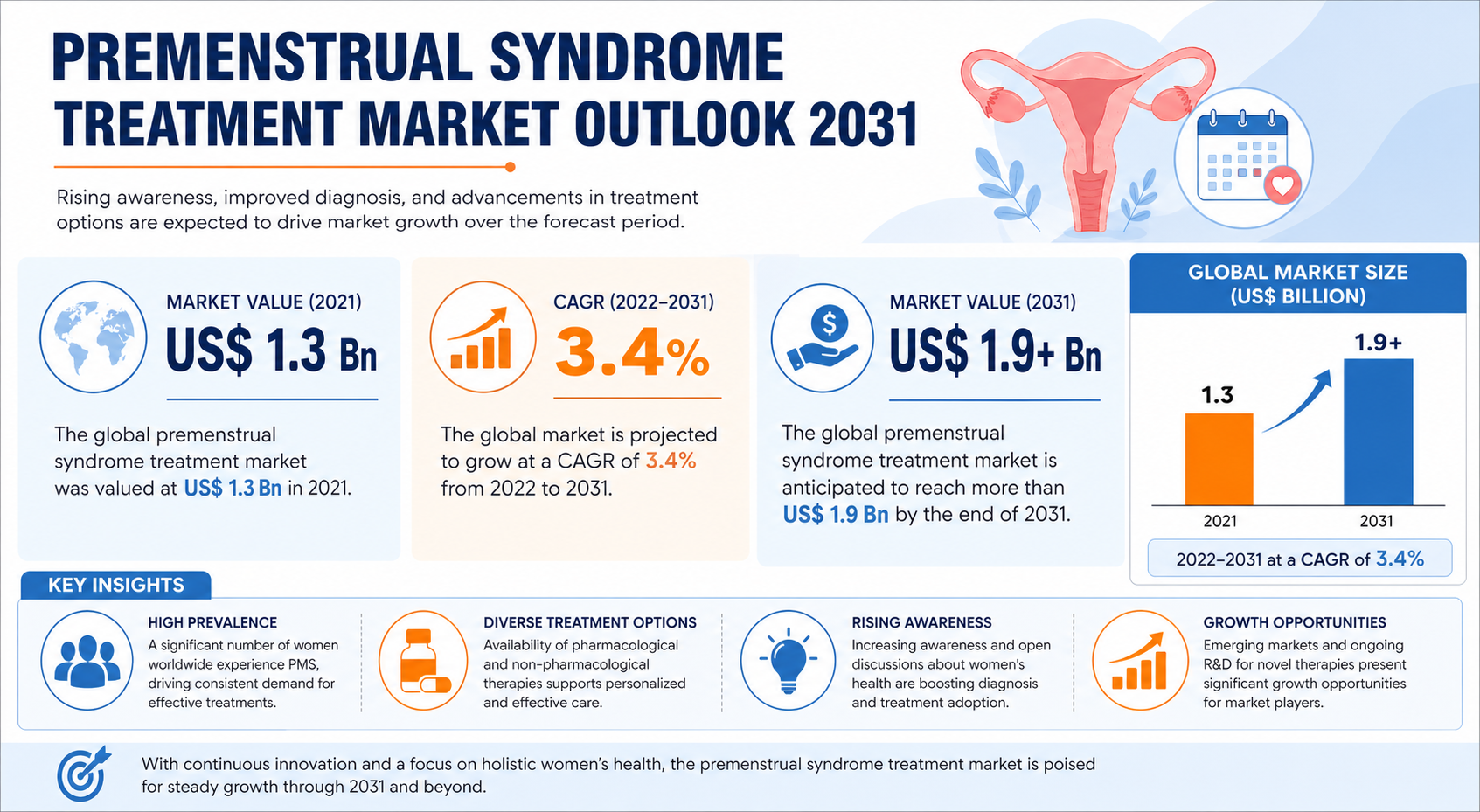
The global Premenstrual Syndrome (PMS) Treatment Market was valued at US$ 1.3 billion in 2021 and is projected to surpass US$ 1.9 billion by the end of 2031, expanding at a compound annual growth rate (CAGR) of 3.4% during the forecast period from 2022 to 2031. The steady growth reflects increasing awareness, rising diagnosis rates, and expanding access to both pharmaceutical and non-pharmaceutical treatment options worldwide.
Gain an understanding of key findings from our Report in this sample –
https://www.transparencymarketresearch.com/sample/sample.php?flag=S&rep_id=2922
Market Overview
Premenstrual syndrome (PMS) encompasses a wide range of physical, emotional, and behavioral symptoms that occur during the luteal phase of the menstrual cycle. These symptoms include mood swings, bloating, fatigue, breast tenderness, and irritability, affecting millions of women globally.
The PMS treatment market includes a broad spectrum of therapeutic approaches such as antidepressants, diuretics, pain relievers, oral contraceptives, ovarian suppression agents, and alternative therapies including dietary supplements and herbal remedies.
In recent years, the market has evolved beyond traditional pharmaceutical treatments. Digital health platforms, telemedicine services, and mobile applications offering mental health support and symptom tracking are becoming integral components of PMS management. The COVID-19 pandemic accelerated the adoption of e-commerce channels and remote healthcare solutions, reshaping how treatments are accessed and delivered.
Key Market Growth Drivers
Several critical factors are fueling the growth of the PMS treatment market:
1. Rising Prevalence of PMS and PMDD
A significant percentage of women experience PMS at some point in their lives. Studies indicate that nearly 70% to 90% of women of reproductive age report premenstrual symptoms, with 20% to 40% experiencing moderate to severe conditions. The increasing recognition of Premenstrual Dysphoric Disorder (PMDD), a severe form of PMS, is further driving demand for effective treatments.
2. Growing Awareness and Diagnosis Rates
Improved awareness campaigns and education initiatives have led to higher diagnosis rates. Women are increasingly seeking medical advice and treatment, contributing to market expansion.
3. Demand for Non-Invasive and Alternative Therapies
Due to side effects associated with conventional drugs such as antidepressants and NSAIDs, there is a growing preference for micronutrient supplements (calcium, magnesium, vitamin B6) and herbal remedies like chasteberry.
4. Expansion of Telemedicine and Digital Health
The integration of telehealth platforms and mobile apps offering psychological support has enhanced accessibility to PMS treatment, especially in remote areas.
5. Increasing Female Workforce and Lifestyle Changes
Sedentary lifestyles, stress, and demanding work schedules have contributed to hormonal imbalances, increasing the prevalence of PMS symptoms and the need for treatment.
Analysis of Key Players – Key Player Strategies
The PMS treatment market is highly competitive, with several global pharmaceutical companies actively expanding their product portfolios and geographic presence. Key players include:
- AbbVie Inc. (Allergan)
- Bayer AG
- Fresenius Kabi AG
- Johnson & Johnson
- Eli Lilly and Company
- Viatris Inc. (formerly Mylan N.V.)
- Pfizer Inc.
- Teva Pharmaceutical Industries Ltd.
Key Strategies Adopted by Market Players:
- Product Portfolio Expansion: Companies are investing in new drug formulations, especially hormonal therapies and combination drugs.
- Mergers & Acquisitions: Strategic collaborations help companies strengthen their market position and expand globally.
- Focus on Women’s Health: Increased R&D investments targeting female-specific conditions.
- Digital Integration: Leveraging digital platforms for patient engagement and adherence tracking.
- Supply Chain Diversification: Adoption of agile supply networks to ensure uninterrupted availability.
Market Challenges & Opportunities
Challenges:
- Side Effects of Conventional Drugs: Antidepressants and NSAIDs can cause adverse effects, limiting their long-term use.
- Lack of Regulation in Supplements: Many herbal and vitamin supplements are not strictly regulated, raising safety concerns.
- Underdiagnosis in Developing Regions: Cultural stigma and lack of awareness hinder diagnosis and treatment.
- Drug Interactions: Supplements may interfere with prescribed medications, posing risks.
Opportunities:
- Growth in Asia Pacific Markets: Increasing awareness and healthcare access present significant growth potential.
- Rising Demand for Natural Remedies: Herbal and organic products are gaining popularity.
- Digital Health Expansion: Apps for symptom tracking and mental health support offer new revenue streams.
- Personalized Medicine: Tailored treatment approaches based on individual hormonal profiles.
Key Player Strategies
Leading companies are focusing on:
- Innovation in Hormonal Therapies
- Development of Low-Side-Effect Drugs
- Expansion into Emerging Markets
- E-commerce Channel Development
- Patient Education Campaigns
These strategies are helping companies maintain competitive advantage while addressing evolving patient needs.
Recent Developments (As per Report)
- The FDA approved MYFEMBREE (relugolix 40 mg, estradiol 1 mg, and norethindrone acetate 0.5 mg), the first once-daily treatment for the management of heavy menstrual bleeding associated with uterine fibroids in premenopausal women, with a treatment duration of up to 24 months, according to Myovant Sciences and Pfizer Inc.. Myovant and Pfizer would jointly commercialize MYFEMBREE in the U.S. under the terms of their previously announced collaboration. MYFEMBREE is scheduled to be released in June 2021.
- In 2021, Fresenius Kabi AG announced that acetaminophen injection in freeflex bags is available in the U.S. In the hospital, acetaminophen injection is used to manage pain and reduce fever. Acetaminophen injection is available in freeflex bags containing 1,000 mg per 100 mL, a preferred delivery system that promotes safety and convenience.
Investment Landscape and ROI Outlook
The PMS treatment market offers a stable and moderately growing investment opportunity. While the CAGR of 3.4% reflects steady growth rather than rapid expansion, the market’s resilience and essential nature make it attractive for long-term investors.
Key Investment Highlights:
- Consistent Demand: PMS affects a large global population, ensuring sustained demand.
- Diversified Revenue Streams: Pharmaceutical drugs, supplements, and digital health solutions.
- Emerging Market Potential: Rapid growth in Asia Pacific and Latin America.
- Innovation-Driven Growth: New drug approvals and digital health tools enhance ROI potential.
Investors can expect moderate but reliable returns, particularly from companies focusing on innovation and emerging markets.
Market Segmentations (with Region)
By Drug Type:
- Antidepressants
- Diuretics
- Pain Relievers
- Oral Contraceptives & Ovarian Suppression Agents
- Others
By Distribution Channel:
- Retail Pharmacies
- E-commerce
- Others
By Region:
- North America: Dominates the market due to high awareness and advanced healthcare infrastructure
- Europe: Strong presence of pharmaceutical companies and supportive healthcare policies
- Asia Pacific: Fastest-growing region driven by rising awareness and population size
- Latin America: Emerging market with increasing healthcare access
- Middle East & Africa: Gradual growth with improving medical infrastructure
Why Buy This Report?
- Comprehensive analysis of market size, trends, and forecasts up to 2031
- Detailed segmentation by drug type, distribution channel, and region
- In-depth competitive landscape and company profiling
- Insights into market drivers, challenges, and opportunities
- Strategic recommendations for stakeholders and investors
- Coverage of recent developments and regulatory landscape
FAQs
1. What is the current size of the PMS treatment market?
The market was valued at US$ 1.3 billion in 2021 and is projected to exceed US$ 1.9 billion by 2031.
2. What are the major drivers of market growth?
Rising prevalence of PMS, increasing awareness, demand for alternative therapies, and digital health expansion.
3. Which region dominates the market?
North America holds the largest market share due to high diagnosis rates and advanced healthcare systems.
4. What are the key treatment types available?
Treatments include antidepressants, pain relievers, diuretics, oral contraceptives, and supplements.
5. Who are the leading players in the market?
Major players include AbbVie, Bayer AG, Pfizer Inc., Johnson & Johnson, and Teva Pharmaceutical Industries Ltd.



Leave a Reply