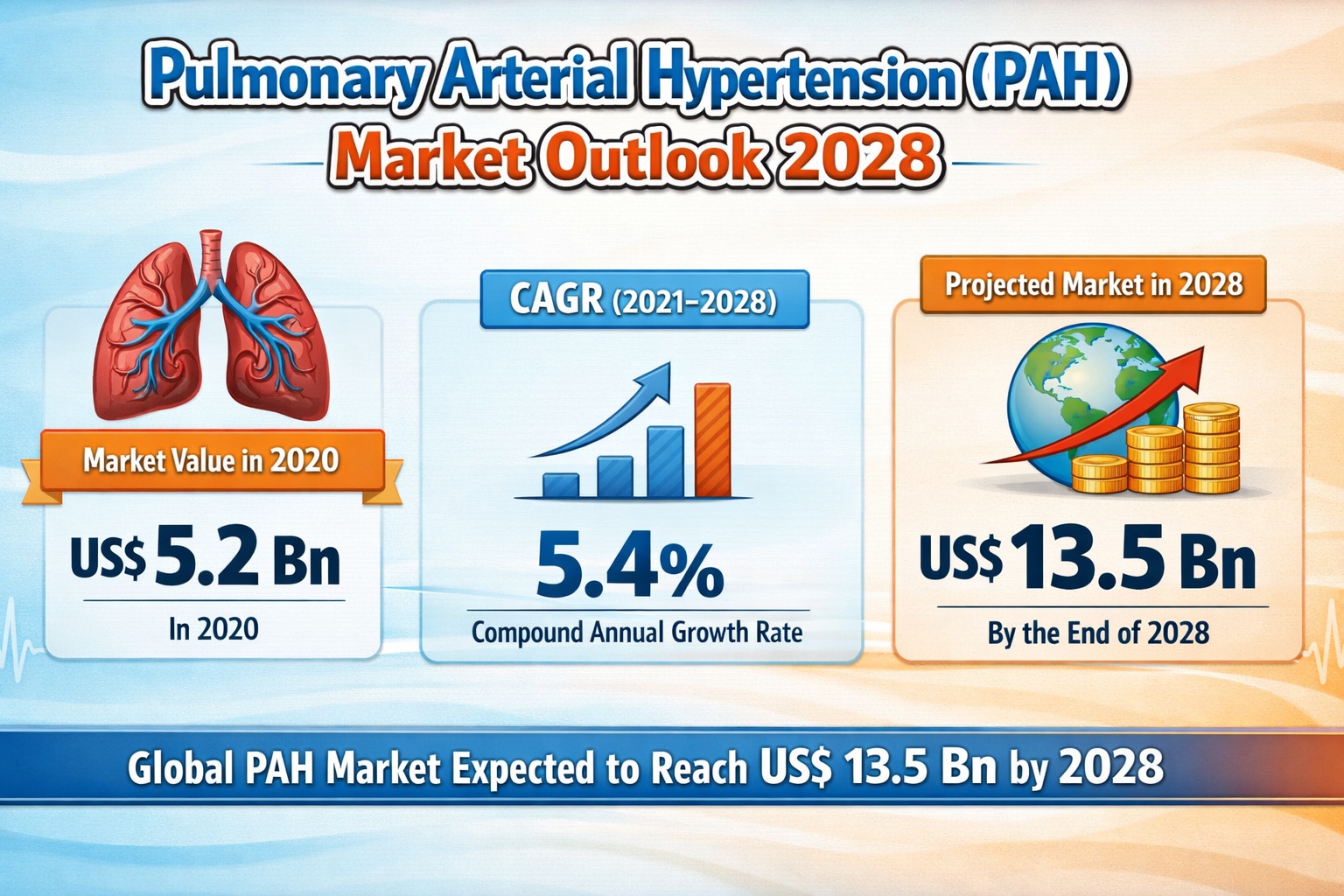
The global pulmonary arterial hypertension (PAH) market is witnessing steady growth, driven by increasing disease prevalence and advancements in drug development. The market was valued at US$ 5.2 Billion in 2020 and is projected to reach US$ 13.5 Billion by 2028, expanding at a CAGR of 5.4% during the forecast period (2021–2028).
This growth reflects the rising demand for effective therapies and the continuous evolution of treatment options for this rare yet life-threatening condition.
Market Overview
Pulmonary arterial hypertension (PAH) is a rare, progressive disorder characterized by elevated blood pressure in the pulmonary arteries, which carry blood from the heart to the lungs. The condition leads to narrowing or blockage of these arteries, resulting in increased strain on the heart and reduced oxygen supply.
The PAH treatment landscape has evolved significantly over the years, with multiple drug classes targeting different biological pathways. These include prostacyclin analogs, endothelin receptor antagonists, and phosphodiesterase inhibitors.
Growing awareness, improved diagnostic capabilities, and the development of innovative therapies are transforming the PAH market. Governments and healthcare organizations are also playing a crucial role by promoting early diagnosis and facilitating access to treatment.
Key Market Growth Drivers
- Increasing Prevalence of PAH
The global incidence of PAH is rising due to factors such as HIV infections, sedentary lifestyles, smoking, and alcohol consumption. This growing patient pool is driving demand for effective treatment options. - Rising Geriatric Population
Aging is a significant risk factor for PAH. The increasing elderly population worldwide is contributing to higher disease incidence, thereby fueling market growth. - Advancements in Drug Development
Technological advancements in drug discovery and development are enabling the introduction of more effective therapies. Innovative drug classes are improving patient outcomes and expanding treatment options. - Growing Awareness and Early Diagnosis
Educational initiatives by governments and healthcare providers are increasing awareness about PAH, leading to earlier diagnosis and better disease management. - Favorable Government Policies and Reimbursement
Supportive healthcare policies and reimbursement frameworks are enhancing patient access to PAH treatments.
Analysis of Key Players – Key Player Strategies
The PAH market is highly fragmented, with several global and regional players competing through innovation and strategic initiatives. Key companies include:
- Pfizer Inc.
- Gilead Sciences
- GlaxoSmithKline
- Novartis
- Bayer
Key Strategies Adopted by Players:
Research & Development Investments
Companies are investing heavily in R&D to develop novel therapies and improve existing treatments.
Strategic Collaborations and Partnerships
Collaborations between pharmaceutical companies and research institutions are accelerating innovation and product development.
Portfolio Expansion
Players are expanding their product portfolios through new drug launches and pipeline development.
Mergers and Acquisitions
M&A activities are helping companies strengthen their market presence and gain access to new technologies.
Market Challenges & Opportunities
Challenges:
- Side effects associated with PAH drugs such as vasodilators
- Stringent regulatory approval processes
- Lack of awareness in developing regions
- High cost of treatment
Opportunities:
Emerging Markets Growth
Countries in Asia Pacific and Latin America offer significant growth potential due to improving healthcare infrastructure.
Innovative Drug Pipeline
The presence of early-stage and late-stage drug candidates provides opportunities for future market expansion.
Increasing Collaborations
Partnerships among stakeholders are enabling the development of advanced therapies.
Focus on Personalized Medicine
Tailored treatment approaches are expected to enhance patient outcomes and create new revenue streams.
Key Player Strategies
Market leaders are focusing on:
- Developing cost-effective and efficient treatment options
- Expanding service offerings to gain competitive advantage
- Leveraging collaborations for innovation
- Enhancing patient access through global expansion
- Strengthening pipeline through clinical trials
These strategies are enabling companies to maintain a competitive edge in a fragmented market landscape.
Recent Developments
- In November 2020, Mylan N.V. merged with Pfizer Inc.’s Upjohn Business to form Viatris, Inc. Viatris provides a robust portfolio of biosimilars, branded & complex generics, and over-the-counter products, including the PAH drug Revatio
- In July 2021, Uptravi, belonging to Prostacyclin and Prostacyclin Analogs segment, received the FDA approval for intravenous use in pulmonary arterial hypertension patients
Investment Landscape and ROI Outlook
The PAH market offers moderate but stable investment opportunities due to its steady growth rate and ongoing innovation in drug development.
Investment Highlights:
- Strong pipeline of drug candidates
- Increasing demand for effective therapies
- Growing focus on rare disease treatments
ROI Outlook:
Investors can expect consistent returns driven by:
- Long-term treatment requirements for PAH patients
- Premium pricing of specialized drugs
- Expansion into emerging markets
Companies with robust R&D pipelines and strategic collaborations are likely to achieve higher returns.
Market Segmentations
By Drug Class:
- Prostacyclin & Prostacyclin Analogs (dominant segment)
- Endothelin Receptor Antagonists (ERAs)
- Phosphodiesterase-5 (PDE-5) Inhibitors
- Soluble Guanylate Cyclase (sGC) Stimulators
By Pipeline Analysis:
- Early-stage Drug Candidates (Phase I & II)
- Late-stage Drug Candidates (Phase III & Registration)
By Region:
- North America (leading market)
- Europe
- Asia Pacific (high growth potential)
- Latin America
- Middle East & Africa
North America dominates due to strong drug pipelines and awareness, while Asia Pacific presents lucrative growth opportunities.
Why Buy This Report?
- Comprehensive analysis of market trends and dynamics
- Detailed segmentation and regional insights
- In-depth competitive landscape and company profiles
- Insights into drug pipelines and innovation trends
- Strategic recommendations for stakeholders
- Reliable forecasts for informed decision-making
FAQs
- What is the projected market size of PAH by 2028?
The market is expected to reach US$ 13.5 Billion by 2028. - What are the key drivers of market growth?
Key drivers include rising prevalence of PAH, aging population, and advancements in drug development. - Which drug class dominates the market?
Prostacyclin and prostacyclin analogs dominate due to high demand. - Which region leads the market?
North America leads due to strong healthcare infrastructure and drug pipeline. - Who are the major players in the market?
Leading companies include Pfizer Inc., Gilead Sciences, and GlaxoSmithKline.


Leave a Reply