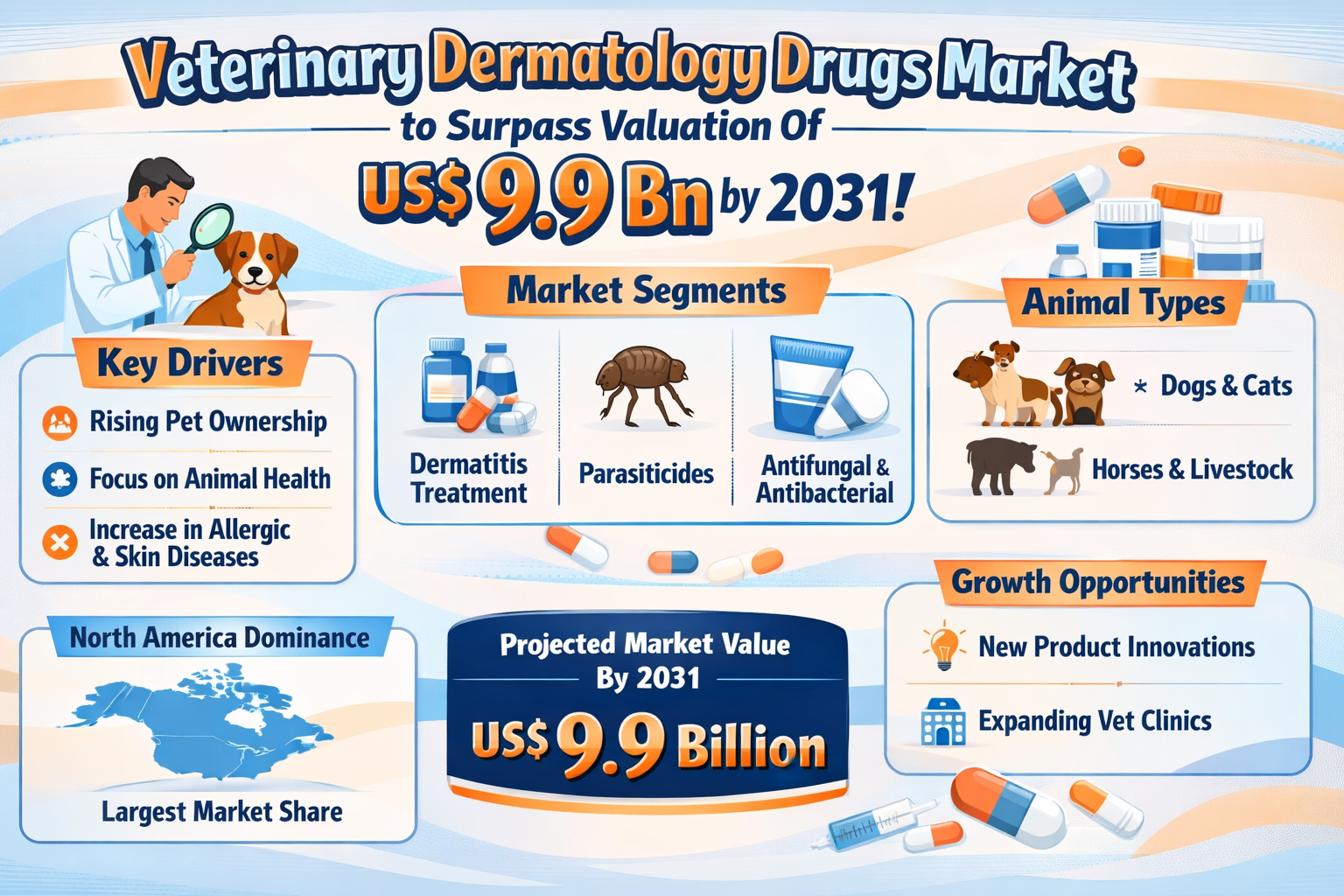
The global veterinary dermatology drugs market was valued at over US$ 3.6 billion in 2020 and is projected to expand at a moderate compound annual growth rate (CAGR) from 2021 to 2031. Growth in the market is driven by increasing pet ownership, rising awareness of animal healthcare, and advancements in veterinary diagnostics and treatment methods.
The steady expansion of veterinary services and growing expenditure on companion animals are expected to sustain market growth over the forecast period.
Review significant findings and insights from our Report in this sample –
https://www.transparencymarketresearch.com/sample/sample.php?flag=S&rep_id=61659
Market Overview
Veterinary dermatology drugs play a crucial role in diagnosing and treating a wide range of skin-related conditions in animals, including bacterial, fungal, parasitic, and autoimmune disorders. Skin diseases are among the most common health issues affecting animals globally, accounting for more than 20% of veterinary consultations.
Common dermatological conditions in animals include allergies, otitis externa, seborrhoeic dermatitis, and pyoderma. Additionally, animals suffer from conditions such as alopecia, parasitic infections, hormonal imbalances, and even skin cancer, which require specialized treatment.
Veterinary dermatologists are increasingly equipped with advanced diagnostic tools and treatment methods, enabling effective management of these conditions. The growing availability of innovative drugs and therapies is improving animal health outcomes and driving market growth.
Key Market Growth Drivers
1. Rising Prevalence of Skin Diseases in Animals
Skin infections, including bacterial, fungal, and parasitic diseases, are highly prevalent among both companion and livestock animals. These conditions often lead to severe health complications, thereby increasing the demand for dermatological treatments.
2. Increasing Pet Ownership and Humanization of Pets
The growing trend of pet adoption, especially in urban areas, has led to increased spending on animal healthcare. Pet owners are more willing to invest in advanced treatments, including dermatology drugs, to ensure the well-being of their animals.
3. Advancements in Veterinary Diagnostics and Treatment
Technological advancements, including molecular diagnostics and improved medical devices, are enabling early detection and effective treatment of skin diseases. This is significantly contributing to market growth.
4. Growth in Zoonotic and Parasitic Infections
Dermatophytes and other parasites are responsible for a large proportion of zoonotic diseases. Increasing awareness and preventive measures are driving the demand for antifungal and antiparasitic drugs.
5. Government Initiatives and Livestock Productivity
Governments across various countries are investing in veterinary healthcare to improve livestock productivity. This includes promoting the use of dermatology drugs to prevent and treat diseases.
Analysis of Key Players – Key Player Strategies
The veterinary dermatology drugs market is highly competitive, with several global and regional players focusing on innovation and expansion. Key players include:
- Merial
- Zoetis, Inc.
- Ceva Sante Animale
- Vetmedica
- IDEXX Laboratories
- Vetoquinol S.A.
- Virbac S.A.
- Bayer Animal Health
- Boehringer Ingelheim
- Elanco
- Novartis Animal Health
- SAVAVET
- Toray Industries
- AB Science
Key Strategies Adopted by Players:
- Product Innovation: Development of new antifungal, antibacterial, and antiparasitic drugs to address evolving disease patterns
- R&D Investments: Focus on improving drug efficacy and safety through continuous research
- Mergers & Acquisitions: Strategic partnerships to expand product portfolios and geographic reach
- Expansion of Distribution Networks: Strengthening supply chains to ensure global availability
- Focus on Companion Animal Segment: Increasing investment in products tailored for pets
Market Challenges & Opportunities
Challenges:
- Regulatory Constraints: Strict government regulations regarding drug approvals can delay product launches
- Impact of COVID-19 Pandemic: Supply chain disruptions and limited workforce affected manufacturing and distribution
- High Cost of Advanced Treatments: Some innovative dermatology drugs may be expensive, limiting adoption in price-sensitive markets
Opportunities:
- Rising Demand for Antifungal Drugs: Increasing incidence of fungal infections is creating significant growth opportunities
- Expansion in Emerging Markets: Countries such as Brazil, India, and China offer high growth potential due to rising pet ownership
- Technological Advancements: Development of molecular diagnostics and targeted therapies
- Growth in Livestock Healthcare: Increasing focus on animal productivity and disease prevention
Key Player Strategies
Leading companies are implementing a combination of growth and sustainability strategies:
- Diversification of Product Portfolio to include advanced dermatology treatments
- Focus on Generic Drug Development to offer cost-effective solutions
- Investment in Digital Veterinary Services such as telemedicine and online consultations
- Strengthening R&D Pipelines for next-generation drugs
- Strategic Collaborations with Veterinary Clinics and Hospitals
Recent Developments
Technological advancements, mergers & acquisition, expansion of product portfolio, and rise in research & development are strategies adopted by companies to expand market presence.
Investment Landscape and ROI Outlook
The veterinary dermatology drugs market presents a favorable investment landscape due to increasing demand for animal healthcare services.
Key Investment Insights:
- Growing Companion Animal Market: Rising pet ownership ensures steady demand
- High Return Potential in Emerging Markets: Rapid urbanization and increased awareness drive growth
- Innovation-Driven Growth: Investments in R&D are expected to yield significant returns
- Stable Demand Across Economic Cycles: Animal healthcare remains a priority, ensuring market resilience
Investors are particularly focusing on companies that offer innovative, cost-effective, and sustainable solutions, as these are expected to generate strong long-term returns.
Market Segmentations
By Product Type:
- Antifungal Drugs
- Antibacterial Drugs
- Antiparasitic Drugs
- Others
By Mode of Administration:
- Topical (Dominant Segment)
- Oral
- Injectable
By Animal Type:
- Large Animals (Equine, Bovine, Others)
- Small Animals (Dogs, Cats, Others)
By Indication:
- Infectious Diseases (Leading Segment)
- Skin Cancer
- Autoimmune Skin Diseases
- Parasitic Infections
- Others
By Region:
- North America: Dominant market due to high awareness, funding, and presence of key players
- Europe: Strong growth driven by increasing awareness and dermatological associations
- Asia Pacific: Rapid growth due to rising livestock population and pet adoption
- Latin America: Emerging market with increasing veterinary investments
- Middle East & Africa: Gradual growth with improving veterinary infrastructure
Why Buy This Report?
- Comprehensive analysis of market size, trends, and growth drivers
- Detailed segmentation across product type, application, and region
- Insights into competitive landscape and key player strategies
- Evaluation of market challenges and emerging opportunities
- Investment insights and ROI outlook
- Access to latest industry developments and strategic initiatives
FAQs
1. What is driving the growth of the veterinary dermatology drugs market?
The market is driven by rising pet ownership, increasing prevalence of skin diseases in animals, and advancements in veterinary diagnostics.
2. Which segment dominates the market?
The antibacterial drugs segment dominates due to high prevalence of bacterial infections in animals.
3. What is the most common mode of administration?
Topical administration is the most widely used due to ease of application and effectiveness.
4. Which region leads the market?
North America holds the largest share due to high awareness, funding, and presence of key industry players.
5. What are the major challenges in the market?
Regulatory constraints, high treatment costs, and supply chain disruptions are key challenges.


Leave a Reply