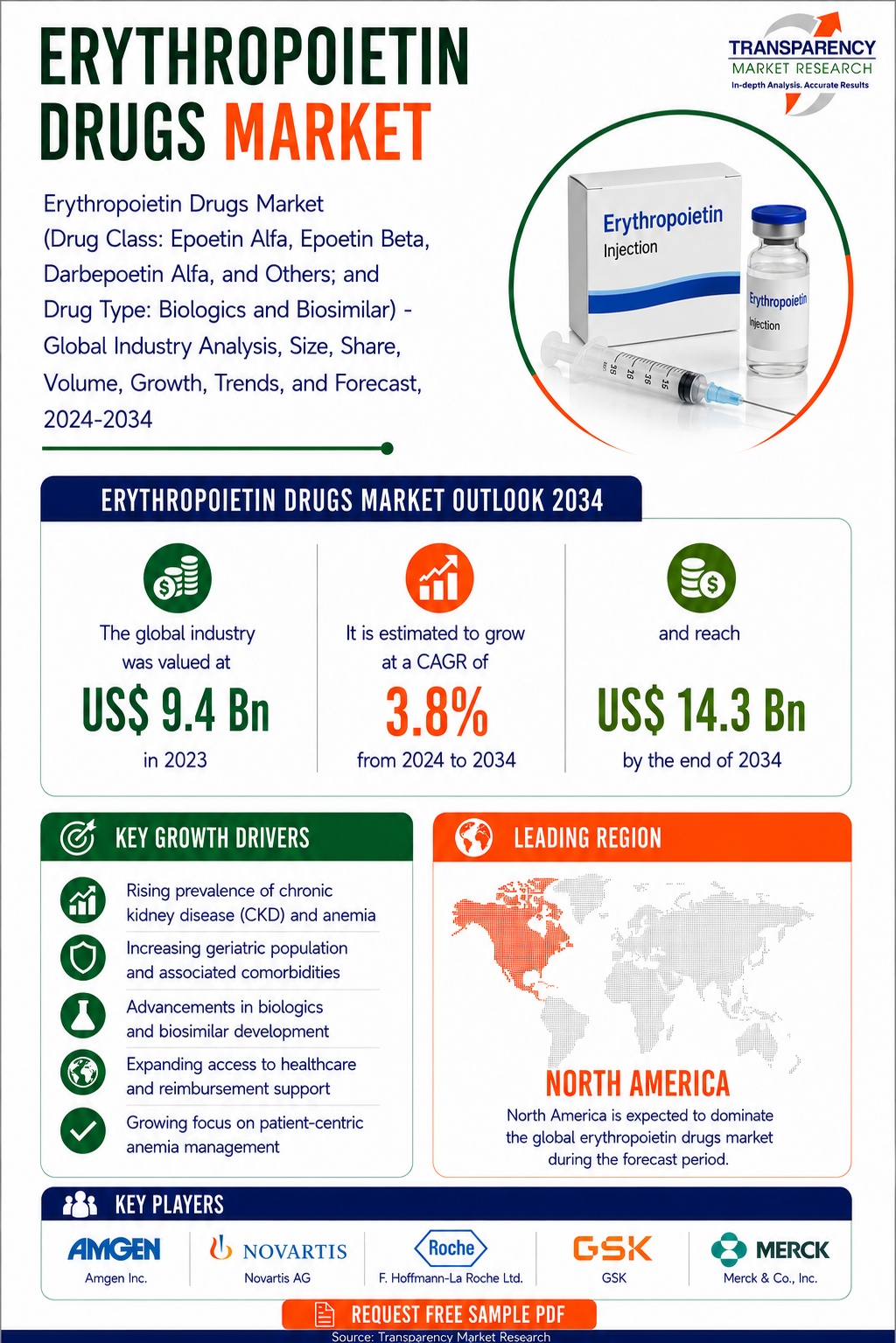
The global erythropoietin drugs market was valued at US$ 9.4 Bn in 2023 and is projected to expand at a CAGR of 3.8% from 2024 to 2034, reaching an estimated value of US$ 14.3 Bn by the end of 2034. The steady growth trajectory of the market is attributed to the increasing prevalence of chronic kidney diseases (CKD), rising incidence of cancer-related anemia, advancements in biotechnology, and growing investments in anemia-related research and drug development.
Erythropoietin drugs, commonly referred to as erythropoiesis-stimulating agents (ESAs), play a crucial role in stimulating red blood cell production in patients suffering from anemia caused by chronic illnesses and medical treatments. These drugs have become an essential part of supportive healthcare therapies across hospitals, cancer care centers, and nephrology clinics worldwide.
Market Overview
Erythropoietin (EPO) drugs are biologically engineered pharmaceutical agents designed to mimic the naturally occurring hormone erythropoietin produced by the kidneys. These drugs help stimulate bone marrow to increase red blood cell production and are widely used in the treatment of anemia associated with chronic kidney disease, chemotherapy-induced anemia, and several hematological conditions.
The growing burden of chronic illnesses worldwide has significantly boosted the need for effective anemia management therapies. Patients undergoing long-term dialysis or cancer treatments frequently experience reduced red blood cell counts, making erythropoietin drugs essential for improving quality of life and reducing dependency on blood transfusions.
The market has also witnessed rapid technological advancements in biologics and biosimilars, enabling manufacturers to introduce improved formulations with enhanced efficacy, reduced dosage frequency, and better patient compliance. Rising awareness regarding anemia management and increasing healthcare expenditure across developing economies are further contributing to market expansion.
Explore the highlights and essential data from our Report in this sample – https://www.transparencymarketresearch.com/sample/sample.php?flag=S&rep_id=1856
Key Drivers of Market Growth
Rising Prevalence of Chronic Kidney Diseases
One of the major factors driving the erythropoietin drugs market is the increasing prevalence of chronic kidney diseases globally. CKD affects the kidney’s ability to produce erythropoietin naturally, leading to severe anemia in many patients. Lifestyle changes, diabetes, hypertension, obesity, and aging populations are significantly contributing to the growing incidence of kidney-related disorders.
According to various healthcare reports, chronic kidney disease is projected to become one of the leading causes of death worldwide by 2040. Millions of patients undergoing dialysis and kidney-related treatments require erythropoietin therapy regularly, creating strong demand for these drugs.
Growing Incidence of Cancer-related Anemia
Cancer patients frequently develop anemia during chemotherapy and radiation therapy due to reduced red blood cell production. Erythropoietin drugs help improve oxygen supply in the body, reduce fatigue, and enhance patient comfort during treatment cycles.
Healthcare organizations estimate that a significant percentage of cancer patients experience moderate to severe anemia during treatment. The increasing global cancer burden is therefore expected to continue fueling demand for ESAs in oncology applications.
Increase in Research Spending
Research spending on anemia correction therapies and advanced erythropoietin formulations has increased substantially in recent years. Biotechnology companies and pharmaceutical firms are focusing on long-acting formulations, improved delivery systems, and biosimilar development to make therapies more affordable and accessible.
The growing understanding of erythropoiesis mechanisms and cardiovascular implications of anemia has encouraged healthcare organizations and governments to invest in innovative treatment solutions. Research collaborations, clinical trials, and strategic partnerships are accelerating product development and market penetration.
Advancements in Biologics and Biosimilars
The increasing adoption of biosimilars is creating cost-effective treatment opportunities in both developed and emerging markets. Biosimilar erythropoietin drugs offer similar therapeutic benefits at comparatively lower costs, improving accessibility for patients and healthcare systems.
Additionally, manufacturers are introducing long-acting formulations that minimize dosage frequency and improve patient adherence. These innovations are expected to play a major role in shaping the future of the market.
Key Players and Industry Leaders
The global erythropoietin drugs market is highly competitive, with leading pharmaceutical companies investing heavily in research, product innovation, and strategic expansion initiatives.
Prominent companies operating in the market include:
- Amgen Inc.
- Novartis AG
- F. Hoffmann-La Roche Ltd.
- GSK
- Merck & Co., Inc.
- Johnson & Johnson
- Wockhardt Ltd.
- Pfizer, Inc.
- Biocon Ltd.
- Teva Pharmaceutical Industries Ltd.
These companies are focusing on expanding their biologics and biosimilar portfolios while strengthening their geographic presence through mergers, acquisitions, and collaborations. Several manufacturers are also investing in next-generation erythropoietin agents to improve treatment outcomes and minimize side effects.
Recent Developments
The erythropoietin drugs market has witnessed several notable developments in recent years aimed at enhancing therapeutic efficiency and expanding market reach.
In October 2023, South Korean biopharmaceutical company Genexine and clinical-stage biotechnology firm KGbio received market approval from Indonesia’s Food and Drug Authority (BPOM) for Efepoetin alfa, a novel long-acting erythropoietin therapy. This approval marked a significant advancement in the development of long-acting ESA products designed to reduce treatment frequency and improve patient convenience.
Several pharmaceutical companies are also actively conducting clinical trials focused on next-generation erythropoietin agents with enhanced safety profiles and prolonged activity duration.
Key Trends for the Future
Several emerging trends are expected to define the future landscape of the erythropoietin drugs market:
- Rising adoption of biosimilars to reduce healthcare costs
- Development of next-generation long-acting ESA formulations
- Increasing use of digital healthcare and remote patient monitoring
- Expansion of biologic manufacturing capabilities
- Greater emphasis on personalized medicine
- Stronger collaborations between biotechnology firms and healthcare providers
- Increased regulatory support for biosimilar approvals
- Growing investments in anemia-focused research programs
New Opportunities and Challenges
Opportunities
Expansion in Emerging Markets: Emerging economies across Asia Pacific, Latin America, and the Middle East are presenting lucrative growth opportunities for erythropoietin drug manufacturers. Rising healthcare awareness, expanding healthcare infrastructure, and increasing diagnosis rates are supporting market penetration in these regions.
Growth of Biosimilars: The growing demand for affordable healthcare solutions has accelerated the adoption of biosimilars. As patents for several biologic drugs expire, biosimilar manufacturers are expected to gain significant opportunities in both developed and developing regions.
Personalized Medicine and Advanced Therapies: Advancements in precision medicine and personalized treatment approaches are opening new avenues for customized anemia therapies. Future ESA products may offer improved patient-specific treatment outcomes with fewer adverse effects.
Challenges
High Treatment Costs: Biologic erythropoietin drugs remain expensive in many regions, limiting accessibility for low-income populations. The high cost of treatment and reimbursement challenges may hinder market growth in certain countries.
Safety Concerns and Side Effects: Certain erythropoietin therapies have been associated with cardiovascular risks, hypertension, and thrombotic complications. Regulatory scrutiny and safety monitoring continue to pose challenges for manufacturers.
Stringent Regulatory Requirements: The development and approval of biologics and biosimilars involve complex regulatory procedures and extensive clinical trials, increasing development timelines and costs for pharmaceutical companies.
Market Trends & Innovations: The erythropoietin drugs market is undergoing rapid transformation with several technological and therapeutic innovations.
Development of Long-acting Formulations: Pharmaceutical companies are increasingly focusing on developing long-acting erythropoietin formulations that reduce injection frequency and improve patient convenience. These products are gaining popularity among patients undergoing long-term dialysis and chemotherapy.
Integration of Novel Drug Delivery Systems: Innovative drug delivery technologies, including prefilled syringes, auto-injectors, and wearable devices, are enhancing patient compliance and simplifying treatment administration.
Increased Focus on Biosimilars: The biosimilar segment is expected to witness substantial growth due to affordability advantages and expanding regulatory approvals. Governments and healthcare providers are encouraging biosimilar adoption to reduce healthcare expenditure.
Artificial Intelligence in Drug Development: AI-driven drug discovery and predictive analytics are being increasingly used to accelerate clinical research and identify more effective anemia treatment strategies.
Buy this Premium Research Report to stay ahead with cutting-edge data – https://www.transparencymarketresearch.com/checkout.php?rep_id=1856<ype=S
Future Outlook
The future of the erythropoietin drugs market appears promising, supported by rising prevalence of chronic diseases, expanding aging populations, and increasing investments in healthcare innovation.
North America is expected to maintain its leading position due to advanced healthcare infrastructure, strong reimbursement systems, and high prevalence of chronic kidney diseases. Europe is projected to experience stable growth owing to rising elderly populations and improved access to healthcare services.
Meanwhile, Asia Pacific is anticipated to emerge as one of the fastest-growing regions due to increasing healthcare spending, large patient populations, and growing awareness regarding anemia management.
Technological advancements in biologics, biosimilars, and drug delivery systems are expected to further enhance market opportunities through 2034.
Market Segmentation
By Drug Class
- Epoetin Alfa
- Epoetin Beta
- Darbepoetin Alfa
- Others
By Drug Type
- Biologics
- Biosimilar
By Drug Application
- Cancer
- Renal Disease
- Hematology
- Neurology
- Others
By Distribution Channel
- Hospital Pharmacy
- Retail Pharmacy
- Online Pharmacy
By Region
- North America
- Latin America
- Europe
- Asia Pacific
- Middle East & Africa
Important FAQs with Answers
How big was the global erythropoietin drugs market in 2023?
The global erythropoietin drugs market was valued at US$ 9.4 Bn in 2023.
What is the expected market size by 2034?
The market is projected to reach US$ 14.3 Bn by the end of 2034.
What is the forecast CAGR for the market?
The market is estimated to grow at a CAGR of 3.8% from 2024 to 2034.
What are erythropoietin drugs used for?
Erythropoietin drugs are used to treat anemia associated with chronic kidney disease, cancer chemotherapy, and other medical conditions that reduce red blood cell production.
What factors are driving market growth?
Key growth drivers include the increasing prevalence of chronic kidney diseases, rising incidence of cancer-related anemia, growth in research spending, and advancements in biologics and biosimilars.
Which region dominated the erythropoietin drugs market in 2023?
North America accounted for the largest market share in 2023.
Which companies are leading the global market?
Major companies include Amgen Inc., Novartis AG, F. Hoffmann-La Roche Ltd., GSK, Merck & Co., Inc., Johnson & Johnson, Pfizer, Inc., Biocon Ltd., Wockhardt Ltd., and Teva Pharmaceutical Industries Ltd.
More Related Reports –
Oncolytic Virus Immunotherapy Market: https://www.transparencymarketresearch.com/oncolytic-virus-immunotherapy-market.html
Antibody Production Market: https://www.transparencymarketresearch.com/antibody-production-market.html
Chondroitin Sulfate Market: https://www.transparencymarketresearch.com/chondroitin-sulfate-market.html
Separation Systems for Commercial Biotechnology Market: https://www.transparencymarketresearch.com/separation-systems-commercial-biotechnology-market.html
About Us Transparency Market Research
Transparency Market Research, a global market research company registered at Wilmington, Delaware, United States, provides custom research and consulting services. The firm scrutinizes factors shaping the dynamics of demand in various markets. The insights and perspectives on the markets evaluate opportunities in various segments. The opportunities in the segments based on source, application, demographics, sales channel, and end-use are analysed, which will determine growth in the markets over the next decade.
Our exclusive blend of quantitative forecasting and trends analysis provides forward-looking insights for thousands of decision-makers, made possible by experienced teams of Analysts, Researchers, and Consultants. The proprietary data sources and various tools & techniques we use always reflect the latest trends and information. With a broad research and analysis capability, Transparency Market Research employs rigorous primary and secondary research techniques in all of its business reports.
Contact:
Abhishek Budholiya
Transparency Market Research Inc.
State Tower, 90 State Street, Suite 700,
Albany NY – 12207, United States
Tel: +1-518-618-1030
USA – Canada Toll Free: 866-552-3453
Website: https://www.transparencymarketresearch.com
Media Inquiries: media@transparencymarketresearch.com
Sales Inquiries: sales@transparencymarketresearch.com




Leave a Reply