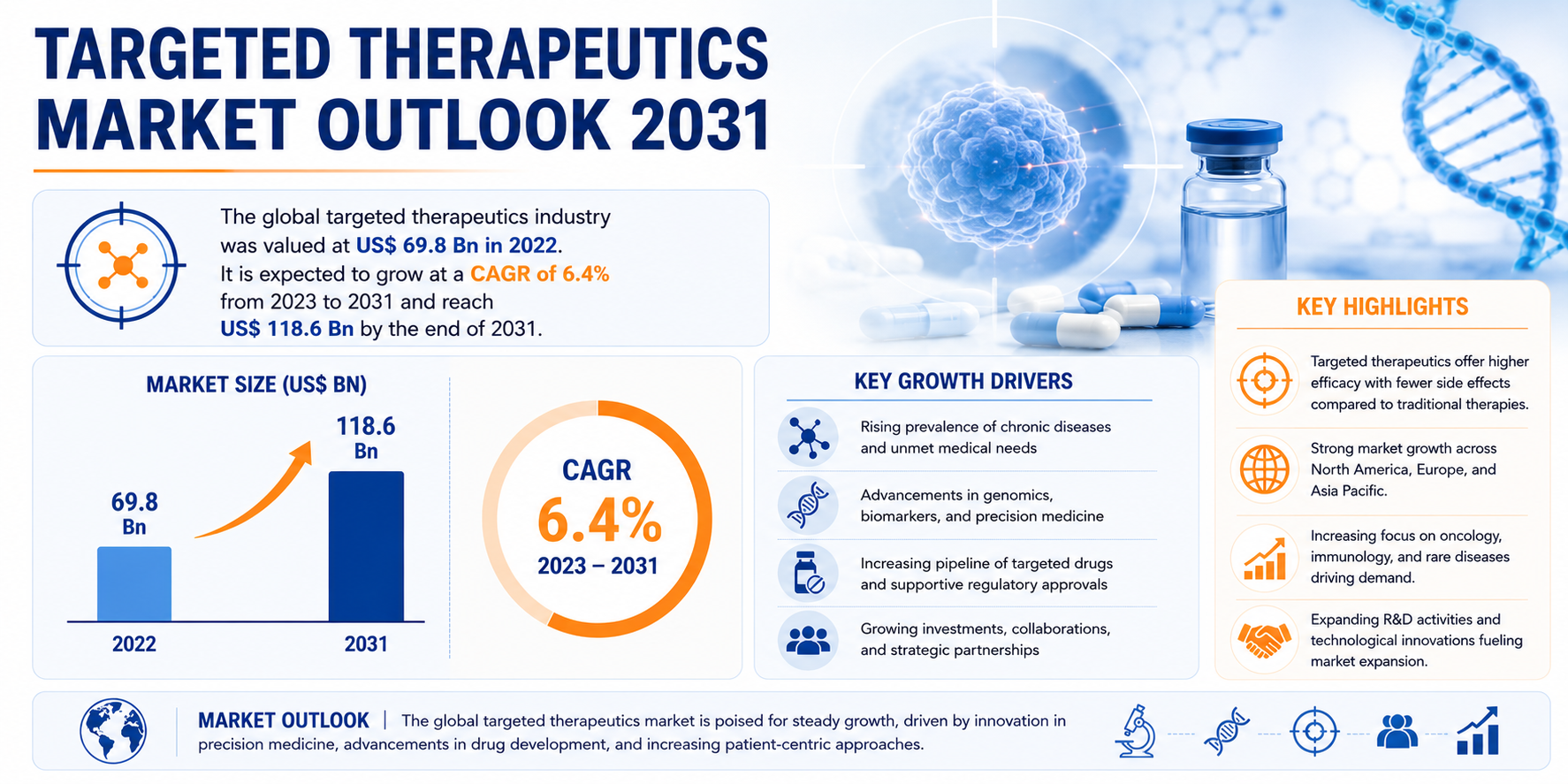
The global targeted therapeutics market is witnessing substantial growth as healthcare systems worldwide increasingly adopt precision medicine and personalized cancer treatment approaches. According to recent industry analysis, the global targeted therapeutics market was valued at US$ 69.8 billion in 2022 and is projected to reach US$ 118.6 billion by the end of 2031, expanding at a CAGR of 6.4% during the forecast period from 2023 to 2031.
Targeted therapeutics have emerged as one of the most promising areas in oncology and chronic disease management. These therapies specifically target proteins, genes, and molecular pathways responsible for disease progression, particularly in cancer cells, while minimizing damage to healthy tissues. Their growing acceptance among healthcare professionals and patients is significantly contributing to market expansion across developed and emerging economies.
Market Overview
Targeted therapeutics represent a transformative approach in modern medicine, particularly in oncology. Unlike traditional chemotherapy, targeted therapeutics focus on specific molecular markers associated with cancer cell growth and survival. These therapies interfere with molecular targets involved in tumor progression, angiogenesis, and metastasis, offering more effective and less toxic treatment options.
The market is broadly segmented into monoclonal antibodies and small molecules. Monoclonal antibodies currently account for a significant share of the market due to their high efficacy in treating various cancers and autoimmune diseases. Small molecule therapies, particularly tyrosine kinase inhibitors, are also witnessing strong adoption owing to their oral administration and improved patient compliance.
Targeted therapeutics are increasingly used for the treatment of breast cancer, colorectal cancer, leukemia, lung cancer, lymphoma, renal cancer, multiple sclerosis, and wet age-related macular degeneration. The increasing integration of biomarker-guided therapeutic approaches and adaptive clinical trial designs is further strengthening market growth.
Healthcare organizations and pharmaceutical companies are investing heavily in precision medicine platforms, synthetic biology, genomic sequencing, and immunotherapy research to develop next-generation targeted therapies. These developments are expected to redefine treatment standards over the coming decade.
Key Market Growth Drivers
Rising Global Cancer Burden
One of the primary factors fueling the growth of the targeted therapeutics market is the increasing prevalence of cancer worldwide. Factors such as air pollution, smoking, excessive alcohol consumption, sedentary lifestyles, unhealthy dietary habits, and aging populations are contributing to the growing incidence of cancer cases globally.
According to the World Health Organization (WHO) and the International Agency for Research on Cancer (IARC), nearly 20 million new cancer cases were diagnosed globally in 2022. Additionally, around 20% of the global population is expected to develop cancer during their lifetime. Lung cancer remains the most commonly diagnosed cancer, followed by breast cancer, colorectal cancer, prostate cancer, and stomach cancer.
The alarming rise in cancer prevalence is increasing demand for innovative therapies capable of delivering higher efficacy with reduced side effects. Targeted therapeutics are increasingly preferred over conventional treatment methods because they selectively attack cancer cells without harming normal tissues.
Growing Adoption of Precision Medicine
The growing emphasis on precision medicine and personalized healthcare is another major growth driver. Precision medicine uses patient-specific molecular and genetic information to tailor treatments according to individual disease profiles.
Targeted therapeutics are central to precision oncology as they enable clinicians to identify biomarkers and molecular abnormalities responsible for disease progression. Biomarker-guided therapies improve treatment outcomes, reduce adverse effects, and support more effective disease management.
Pharmaceutical companies are increasingly developing companion diagnostics and molecular testing platforms to support targeted therapeutic applications. The integration of genomic technologies into routine clinical practice is expected to create significant opportunities for market expansion.
Increasing Awareness Campaigns
Governments, healthcare organizations, and cancer foundations across the globe are conducting awareness campaigns to promote early cancer diagnosis and personalized treatment solutions. These initiatives are improving patient understanding regarding the benefits of targeted therapies.
In 2020, 194 countries aligned with the WHO’s global strategy aimed at eliminating cervical cancer worldwide. Similarly, educational campaigns such as “Let’s Demask Cancer” have highlighted the importance of early diagnosis and customized therapeutics in improving patient survival rates.
Growing awareness regarding early screening, molecular testing, and targeted treatments is expected to accelerate market adoption during the forecast period.
Advancements in Biotechnology and Synthetic Biology
Continuous advancements in biotechnology, immunotherapy, and synthetic biology are supporting the development of innovative targeted therapeutic solutions. Researchers are exploring engineered antibodies, bispecific antibodies, antibody-drug conjugates, and gene-editing technologies to improve therapeutic precision and efficacy.
The increasing use of artificial intelligence, machine learning, and bioinformatics in drug discovery is further accelerating the identification of novel molecular targets and personalized therapies.
Analysis of Key Players – Key Player Strategies
Leading pharmaceutical and biotechnology companies are actively focusing on strategic initiatives such as product innovation, mergers and acquisitions, research collaborations, and rapid regulatory approvals to strengthen their market position.
Major companies operating in the global targeted therapeutics market include Sanofi, GlaxoSmithKline plc, Takeda Pharmaceutical Company Ltd., Merck & Co., Inc., Novartis AG, Pfizer Inc., F. Hoffmann-La Roche Ltd., AstraZeneca, Seagen, Inc., Bayer AG, Amgen, Inc., and Bristol-Myers Squibb Company.
Product Innovation and Pipeline Expansion
Key players are heavily investing in oncology pipelines and next-generation biologics to address unmet medical needs. Companies are focusing on developing therapies targeting HER2, EGFR, MET, PD-1/PD-L1, and other critical molecular pathways associated with cancer progression.
Pipeline diversification is enabling companies to expand therapeutic applications beyond oncology into autoimmune disorders, neurological diseases, and rare genetic conditions.
Strategic Collaborations and Partnerships
Pharmaceutical companies are increasingly collaborating with biotechnology firms, research institutes, and genomic testing companies to accelerate innovation and reduce drug development timelines.
Strategic partnerships are facilitating access to advanced technologies such as gene sequencing, AI-driven drug discovery, and companion diagnostics. These collaborations are also supporting the commercialization of novel therapies across global markets.
Regulatory Approvals and Commercial Expansion
Rapid regulatory approvals from organizations such as the U.S. FDA and the European Medicines Agency are enabling companies to commercialize targeted therapies faster. Companies are also expanding manufacturing capacities and strengthening global distribution networks to improve product accessibility.
Focus on Emerging Markets
Leading players are increasingly targeting emerging economies in Asia Pacific, Latin America, and the Middle East & Africa due to rising healthcare investments, improving diagnostic infrastructure, and growing cancer awareness.
Market Challenges & Opportunities
Challenges
Despite strong growth potential, the targeted therapeutics market faces several challenges.
High Treatment Costs
Targeted therapies are often associated with high research, development, and manufacturing costs. These expenses translate into high treatment prices, limiting accessibility for patients in low- and middle-income countries.
Complex Regulatory Requirements
Obtaining regulatory approvals for targeted therapeutics requires extensive clinical validation, biomarker identification, and safety assessments. Stringent approval procedures can delay product commercialization.
Limited Availability for Certain Cancers
Currently, targeted therapies are not available for all cancer types. Some tumors lack identifiable molecular targets, limiting therapeutic applicability.
Drug Resistance
Cancer cells can develop resistance to targeted therapies over time through genetic mutations and adaptive signaling pathways. Addressing therapeutic resistance remains a critical challenge for researchers and healthcare providers.
Opportunities
Expansion of Biomarker Research
Advancements in biomarker discovery are expected to create significant growth opportunities. The identification of novel molecular targets will support the development of highly personalized therapies.
Growth in Emerging Economies
Increasing healthcare expenditure, rising cancer prevalence, and improving diagnostic infrastructure in emerging markets are expected to generate lucrative opportunities for market players.
Integration of Artificial Intelligence
AI-driven drug discovery and predictive analytics are accelerating target identification and clinical trial optimization, reducing development timelines and improving success rates.
Combination Therapies
The growing use of combination therapies involving targeted therapeutics, immunotherapies, and chemotherapy is expected to improve treatment outcomes and expand market applications.
Key Player Strategies
To maintain competitive advantage, market participants are implementing several strategic initiatives:
- Investment in advanced biologics and precision medicine technologies
- Expansion of oncology product portfolios
- Collaboration with genomic testing companies
- Acquisition of biotechnology startups
- Development of companion diagnostics
- Strengthening of regional distribution networks
- Adoption of AI-based drug discovery platforms
- Focus on orphan drug development and rare disease therapies
Companies are also prioritizing patient-centric treatment approaches and real-world evidence generation to improve market penetration and reimbursement support.
Recent Developments
In May 2021, the U.S. FDA approved Janssen’s Rybrevant (amivantamab), a bispecific antibody directed against epidermal growth factor (EGF) and MET receptors, for adult patients with locally advanced or metastatic non-small cell lung cancer (NSCLC) with epidermal growth factor receptor (EGFR) exon 20 insertion mutations.
This approval marked a significant advancement in targeted oncology therapies and highlighted the growing importance of biomarker-driven treatments in cancer care.
Investment Landscape and ROI Outlook
The targeted therapeutics market is attracting substantial investments from pharmaceutical companies, venture capital firms, and institutional investors due to its strong long-term growth potential.
Investments in precision medicine, biologics manufacturing, molecular diagnostics, and AI-driven drug discovery are increasing significantly. Governments and healthcare agencies are also supporting oncology research through grants, public-private partnerships, and innovation programs.
The return on investment (ROI) outlook remains favorable owing to increasing global demand for personalized therapies, rising cancer prevalence, and premium pricing opportunities associated with innovative biologics.
Companies with strong oncology pipelines, biomarker capabilities, and global commercialization strategies are expected to generate significant revenue growth over the forecast period.
Market Segmentations
By Type
- Monoclonal Antibodies
- Angiogenesis Inhibitors
- HER-2 Targeted Agents
- Anti-CD20 Monoclonal Antibodies
- Small Molecule
- Tyrosine Kinase Inhibitors
By Application
- Breast Cancer
- Colorectal Cancer
- Leukemia
- Lung Cancer
- Lymphoma
- Multiple Sclerosis
- Renal Cancer
- Wet Age-related Macular Degeneration
- Others
- Ovarian Cancer
- Fallopian Tube Cancer
- Prostate Cancer
- Pancreatic Cancer
By Distribution Channel
- Hospital Pharmacies
- Retail Pharmacies
- Online Pharmacies
By Region
North America
- U.S.
- Canada
Europe
- Germany
- U.K.
- France
- Italy
- Spain
Asia Pacific
- China
- India
- Japan
- Australia & New Zealand
Latin America
- Brazil
- Mexico
Middle East & Africa
- South Africa
- GCC
North America currently dominates the global market due to high cancer incidence, strong healthcare infrastructure, and rapid adoption of precision medicine. Europe and Asia Pacific are also expected to witness substantial growth during the forecast period.
Why Buy This Report?
- Gain comprehensive insights into the global targeted therapeutics market dynamics
- Understand major growth drivers, restraints, and emerging opportunities
- Analyze competitive strategies adopted by leading market players
- Access detailed segmentation analysis across product types, applications, distribution channels, and regions
- Identify high-growth investment opportunities and future market trends
- Evaluate regional market outlooks and expansion potential
- Understand regulatory developments and technological advancements shaping the industry
- Obtain strategic intelligence for business planning and decision-making
Frequently Asked Questions (FAQs)
1. What is the projected value of the global targeted therapeutics market by 2031?
The global targeted therapeutics market is projected to reach US$ 118.6 billion by the end of 2031.
2. What is driving the growth of the targeted therapeutics market?
Major growth drivers include rising cancer prevalence, increasing adoption of precision medicine, growing awareness campaigns, and advancements in biotechnology and biomarker research.
3. Which region dominates the targeted therapeutics market?
North America currently holds the largest market share due to high cancer incidence, advanced healthcare infrastructure, and strong adoption of personalized medicine.
4. What are the major types of targeted therapeutics?
The market is primarily segmented into monoclonal antibodies and small molecule therapies such as tyrosine kinase inhibitors.
5. Who are the leading companies in the targeted therapeutics market?
Key market participants include Sanofi, GlaxoSmithKline plc, Takeda Pharmaceutical Company Ltd., Merck & Co., Inc., Novartis AG, Pfizer Inc., F. Hoffmann-La Roche Ltd., AstraZeneca, Seagen, Inc., Bayer AG, Amgen, Inc., and Bristol-Myers Squibb Company.



Leave a Reply